About this ebook
Infused with classical symbolism, inspired by the myth and philosophy of Ancient Greece, Rubén Darío’s Azul... bridges the gap between ancient and modern. Rather than focus on the differences between the two, he envisions the past as a living entity, allowing history and fantasy to coincide with the social realities of his time. In these poems and stories, fairies from the plays of Shakespeare appear alongside the working men and women of Latin America. Dreams coincide with a reality mired in poverty, labor, and passionless social climbing. Poets and port workers sing and die in a city of ghostly beauty. Azul... is less a book than it is an experience, and nearly a century and a half after its publication it remains one worth the taking.
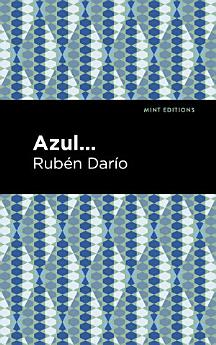
With a beautifully designed cover and professionally typeset manuscript, this edition of Rubén Darío’s Azul... is a classic of Nicaraguan literature reimagined for modern readers.
About the author
Rubén Darío (1867-1916) was a Nicaraguan poet. Following his parents’ separation, he was raised in the city of León by Félix and Bernarda Ramirez, his maternal aunt and uncle. In 1879, after years of hardship following the death of Félix, Darío was sent to a Jesuit school, where he began writing poetry. He found publication in El Termómetro and El Ensayo, a popular daily and a local literary magazine, and was recognized as a promising young writer. Darío soon gained a reputation for his liberal politics and was denied an opportunity to study in Europe due to his opposition of the Catholic Church. In 1882, he travelled to El Salvador, where he studied French poetry with Francisco Gavidia and sharpened his sense of traditional poetic forms. Back in Nicaragua, he suffered from financial hardship and poor health while attempting to broaden his style through experimentation with new poetic forms. In 1886, he traveled to Chile, where he published his masterpiece Azul... (1888), a groundbreaking blend of poetry and prose that helped define and distinguish Hispanic Modernism. The success of Azul... enabled Darío to find work as a correspondent for La Nación, a popular periodical based in Buenos Aires. He travelled widely throughout his career, working as a journalist and ambassador in Argentina, France, and Spain. Darío continued to write and publish poetry, courting controversy with a series of poems written on Theodore Roosevelt and the United States which displayed his inconsistent political position on the impact of American imperialism on Latin America. Towards the end of his life, suffering from advanced alcoholism, Darío returned to his native city of León, where he was buried after a lengthy funeral at the Cathedral of the Assumption of Mary.