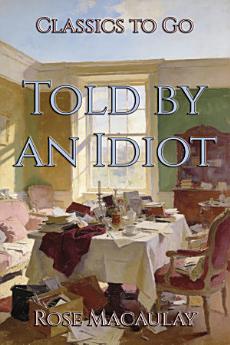
Told by an Idiot: Restored Classics to Go Edition
About this ebook
Discover more
About the author
Rose Macaulay was an English novelist, essayist, and critic whose long career spanned the upheavals of the early and mid-twentieth century, and whose sharp intelligence and dry wit made her one of the most distinctive voices of her generation. Born in 1881 and educated at Oxford, she began publishing in the Edwardian era and went on to build a remarkably varied body of work that moved easily between satire, social observation, travel writing, and more reflective fiction. Over time, her writing became increasingly marked by a keen awareness of war, loss, faith, doubt, and the changing place of women in modern life. She is especially admired for her ability to combine elegance with irony, and for her gift for exposing the absurdities of social convention without losing sympathy for her characters. Her most enduring books explore the tension between intellect and feeling, the fragility of belief, the pressures of duty, and the comedy that often accompanies human confusion. These concerns still feel immediate today, especially in a world that continues to wrestle with uncertainty, identity, and rapid change. Macaulay's legacy lies in her clear-eyed moral seriousness tempered by wit, and in her talent for making private dilemmas feel socially and historically alive. Readers who enjoy intelligent, witty fiction with depth, nuance, and a lightly satirical edge will find her especially rewarding.