About this ebook
The world in which we find ourselves today is no longer governable entirely by resort to the classical system of international law. Even more seriously, it would seem that the purposes and principles of the United Nations Charter are no longer being served sufficiently in light of new concerns. The text adopted in 1945 does not convey the image of a world tormented by terrorists. Nor does it reflect the most pressing commitments of our time: to democratic governance, to environmental responsibility, and to a freer and more equitable system of world trade. Increasingly, the international law community acknowledges the need to set new priorities in the development of international law.
To that end it seems timely to reconsider the case for strengthening the constitutional framework of norms and institutions that seemed to offer the promise of fulfillment in the second half of the 20th century. The post-Cold War euphoria of the 1990s has virtually evaporated under the stress of new concerns at a time when states comprising the UN system are no longer capable of addressing these challenges.
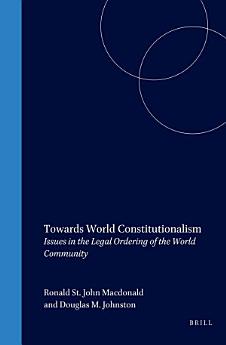
Towards World Constitutionalism argues the case for a more ‘constitutionalized’ system of international law and diplomacy. It is published at a time that the call for reform of the United Nations has become more insistent than at any time in its 60-year history. Even those most faithful to the purposes and principles enunciated in the Charter have had to admit to concerns about the management of certain sectors of the organization; and most concede the unrepresentative character of the powerful Security Council granted legal supremacy as the enforcer of international peace and security. Many go further and complain of unconscionable political bias in the General Assembly and in certain, over politicized, agencies.
This collection of essays, by a selection of distinguished scholars representing various traditions of international law, constitutes a major contribution to this debate. It is an important resource for scholars and practitioners, and for all those concerned with the future of international law, and the world community.
The world in which we find ourselves today is no longer governable entirely by resort to the classical system of international law. Even more seriously, it would seem that the purposes and principles of the United Nations Charter are no longer being served sufficiently in light of new concerns. T...
Discover more
Rate this ebook
Tell us what you think.
Reading information
Smartphones and tablets
Install the Google Play Books app for Android and iPad/iPhone. It syncs automatically with your account and allows you to read online or offline wherever you are.
Laptops and computers
You can listen to audiobooks purchased on Google Play using your computer's web browser.
eReaders and other devices
To read on e-ink devices like Kobo eReaders, you'll need to download a file and transfer it to your device. Follow the detailed Help Center instructions to transfer the files to supported eReaders.