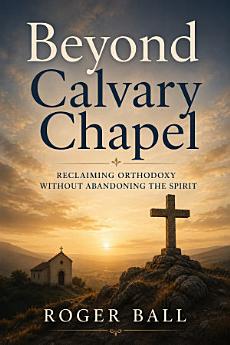
Beyond Calvary Chapel: Reclaiming Orthodoxy Without Abandoning the Spirit
About this ebook
In the late 1960s, as America convulsed with civil unrest and generational fracture, something remarkable happened. Thousands of countercultural youth—hippies, runaways, spiritual seekers disillusioned with institutional authority, establishment religion, and secular emptiness—began flooding into places like Calvary Chapel in Costa Mesa, California. Many found genuine conversion, biblical teaching, and a vibrant awareness of the Holy Spirit's work. The Jesus Movement produced lasting fruit: contemporary worship, a recovery of expository preaching, thousands of church plants, and a generation formed by verse-by-verse Bible teaching.
But movements don't emerge in a vacuum. The theological DNA of Calvary Chapel—now one of the ten largest Protestant associations in America—was shaped not only by Scripture but by the Romantic anti-rationalism, psychological wounds, and institutional suspicion of the counterculture that gave it birth.
Beyond Calvary Chapel offers a searching, fair-minded examination of the movement's origins, genuine contributions, and persistent theological failures.
This essay traces striking parallels with neo-orthodox dialectical theology and its embrace of paradox as a method for avoiding doctrinal precision. It exposes the “Moses Model” of unchecked pastoral authority and its recurring consequences. It documents the rejection of church membership and the functional antinomianism that followed—including the weaponization of “legalism” as an emotional shield against biblical confrontation. It also examines the feminization of worship, the conflation of emotion with genuine spirituality, and the anti-intellectualism that discourages doctrinal formation.
But this is not mere polemic, Beyond Calvary Chapel honors what Calvary Chapel got right: expository Bible teaching, recovery of dependence on the Holy Spirit, and Christ-like hospitality to the broken and marginalized.
The way forward is not back to cold institutionalism—but toward a “Calvary Reformed” synthesis: verse-by-verse exposition with confessional depth, Spirit-led vitality with doctrinal precision, radical welcome with covenantal accountability.
Drawing on Reformed orthodoxy—Calvin, Edwards, Spurgeon, Lloyd-Jones— Beyond Calvary Chapel makes the case for recovering the fullness of New Testament Christianity: truth in love, not truth versus love.
Discover more
Ratings and reviews
About the author
Roger Ball is a Reformed Christian writer who lives on the Florida Spacecoast. He writes on Christian theology, apologetics, psychology, and culture.