关于此电子书
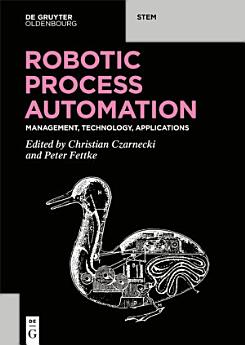
Similar to the substitution of physical work in manufacturing (blue collar automation), Robotic Process Automation tries to substitute intellectual work in office and administration processes with software robots (white-collar automation). The starting point for the development of RPA was the observation that – despite the use of process-oriented enterprise systems (such as ERP, CRM and BPM systems) – additional manual activities are still indispensable today. In the RPA approach, these manual activities are learned and automated by software robots, either by defining rules or by observing manual activities.
RPA is related to business process management, machine learning, and artificial intelligence. Tools for RPA originated from dedicated stand-alone software. Today, RPA functionalities are also integrated into elaborated process management suites. From a conceptual perspective, RPA can be structured into input components (sensors in the wide sense), an intelligence center, and output components (actuators in the wide sense). From a strategic perspective, the impact of RPA can be related to the support of existing tasks, the complete substitution of human activities, and the innovation of processes as well as business models.
At present, high expectations are related to the use of RPA in the improvement of software-supported business processes. Manual activities are learned and automated by software robots that interact with existing applications via the presentation layer. In combination with artificial intelligence (AI) as well as innovative interfaces (e. g., voice recognition) RPA creates a novel level of automation for office and administration processes. Its benefit potential reaches a return on investment (ROI) up-to 800% that is documented in various case studies.
探索更多
作者简介
Prof. Dr.-Ing. Christian Czarnecki studierte Wirtschaftsinformatik an der Westfälischen Wilhelms-Universität in Münster. Von 2006 bis 2015 leitete er bei der Detecon International GmbH in Köln eine Vielzahl nationaler und internationaler Projekte im Umfeld der Telekommunikationsbranche. Neben seiner Tätigkeit als Unternehmensberater promovierte er an der Otto-von-Guericke-Universität Magdeburg. Anfang 2015 übernahm er die Professur "Wirtschaftsinformatik und Informationssysteme" an der Hochschule für Telekommunikation Leipzig. Seit März 2019 bringt Prof. Dr.-Ing. Christian Czarnecki seine Expertise in der Professur "Wirtschaftsinformatik" an der Hochschule Hamm-Lippstadt ein.
Er ist Autor zahlreicher wissenschaftlicher Publikationen und kann auf eine Vielzahl von Vorträgen bei Tagungen und Konferenzen verweisen. Prof. Dr.-Ing. Christian Czarnecki ist weiterhin als Mitglied internationaler Organisationen sowie als Gutachter für namhafte nationale und internationale Konferenzen und Zeitschriften tätig. Seine Forschungsschwerpunkte umfassen u. a. die Digitale Transformation, innovative Geschäftsmodelle, Prozessmanagement sowie Unternehmensarchitekturen.
Prof. Dr. Peter Fettke is Professor of Business Informatics at the University of Saarland and Principal Researcher, Research Fellow and Research Group Leader at the German Research Center for Artificial Intelligence (DFKI) in Saarbrücken. In his research, Professor Fettke and his 30-strong research group focus on the interface between the topics of process management and artificial intelligence (AI). In addition to researching the potential applications of AI technologies such as deep learning and process mining in an operational context, researching the impact of digitalization on business model innovation and modeling of business operations are also key areas of his work. Professor Fettke is the author of more than 100 specialist publications. His works are among the most cited articles in leading international journals on business informatics and he is one of the top 10 most cited scientists at the DFKI. He is also a much sought-after consultant of prestigious conferences, journals and research organizations.