An Insatiable Dialectic: Essays on Critique, Modernity, and Humanism

· Cambridge Scholars Publishing
Ebook
240
Pages
Eligible

About this ebook

This book includes studies by leading philosophers and cultural critics from Asia, Europe, and the Americas. The essays represent different philosophical traditions and contrasting cultural viewpoints in the arts, literature, architecture, philosophy, and the global politics of today. In spite of their discrepancies, the authors of these essays agree on one fundamental point: critical forums of this scope are crucial and thus necessary as we enter the twenty-first century. After two World Wars and the rise of Western and Eastern forms of totalitarianism, these core features of Western civilization – critique, modernity, and humanism – have been contested and dismissed as areas of mere academic interest. The contributors to this book challenge such a view.

An Insatiable Dialectic: Essays on Critique, Modernity, and Humanism will be of benefit to scholars, college students, and to probing readers interested in a founding Western legacy that seldom appears as the focus of inquiry in a single book, herein divided into three parts: “Critique and Modernity,” “Humanism and the Humanities,” and “Traditions and Global Modernities.” While modernity and modernization have been embraced by nations around the globe, humanism and critique have almost disappeared from contemporary mainstream discourse, at times unjustly set aside as elitist, or as an obsolete domain of a liberal tradition that has failed to grasp the hard realities of our global age. This book disputes these short-sighted and clearly ideological positions, pointing to the radically transforming effects of modernization on the world’s traditional cultures, and the inevitable problems and challenges in areas relative to religious fundamentalisms, weakening political institutions, ecosystems ravaged by global technologies, and world-wide attempts by various nations to achieve economic and political stability. In the debates and tentative conclusions presented in this book, the reader will learn about the on-going dialectic that shapes modernity through a re-imagined humanism and critique, currently indispensable in an emerging world order in which democratic ideals and intercultural understanding are vanishing possibilities.
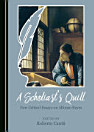
This book includes studies by leading philosophers and cultural critics from Asia, Europe, and the Americas. The essays represent different philosophical traditions and contrasting cultural viewpoints in the arts, literature, architecture, philosophy, and the global politics of today. In spite of...

About the author

Roberto Cantú is Professor of Chicano Studies and English at California State University, Los Angeles. He has numerous publications on Latin American, Mexican American, and Mesoamerican literatures, and is co-editor of Tradition and Innovation in Mesoamerican Cultural History. He edited the bilingual edition (English/Spanish) of La raza cόsmica, by José Vasconcelos, and translated José Antonio Villarreal’s novel Pocho from English to Spanish. He is currently editing a book of essays on Mexican writer Carlos Fuentes (1928–2012).

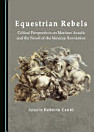
Roberto Cantú is Professor of Chicano Studies and English at California State University, Los Angeles. He has numerous publications on Latin American, Mexican American, and Mesoamerican literatures, and is co-editor of Tradition and Innovation in Mesoamerican Cultural History. He edited the bilin...

Rate this ebook

Tell us what you think.

Reading information

Smartphones and tablets
Install the Google Play Books app for Android and iPad/iPhone. It syncs automatically with your account and allows you to read online or offline wherever you are.
Laptops and computers
You can listen to audiobooks purchased on Google Play using your computer's web browser.
eReaders and other devices
To read on e-ink devices like Kobo eReaders, you'll need to download a file and transfer it to your device. Follow the detailed Help Center instructions to transfer the files to supported eReaders.