Robots through the Ages: A Science Fiction Anthology
About this ebook
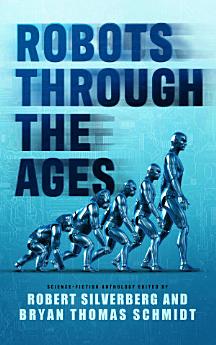
This anthology, with an introduction by Robert Silverberg, offers a sweeping survey of robots as depicted throughout literature. Since the Iliad—in which we are shown golden statues built by Hephaestus “with minds and wisdoms”—humans have been fascinated by the idea of artificial life. From the Argonautica to the medieval Jewish legend of the Golem and Ambrose Bierce’s tale of a chess-playing robot, the idea of what robots are—and who creates them—can be drastically different.
This book collects a broad selection of short stories from celebrated authors such as Philip K. Dick, Seanan McGuire, Roger Zelazny, Connie Willis, and many more. Robots through the Ages not only celebrates the history of robots and the genre of science fiction, but the dauntless nature of human ingenuity.
Discover more
About the author
Robert Silverberg’s first published story appeared in 1954 when he was a sophomore at Columbia University. Since then, he has won multiple Nebula, Hugo, and Locus awards. He has been nominated for both awards more times than any other writer. In 1999 he was inducted into the Science Fiction Hall of Fame, and in 2004 the Science Fiction and Fantasy Writers of America gave him their Grand Master Award for career achievement. He remains one of the most imaginative and versatile writers in science fiction.
Bryan Thomas Schmidt is an author and Hugo-nominated editor of adult and children’s speculative fiction. His debut novel, The Worker Prince, received Honorable Mention on Barnes & Noble Book Club’s Year’s Best Science Fiction Releases. His short stories have appeared in magazines, anthologies, and online and include stories in The X-Files and Decipher’s WARS. As an editor he has edited books by such luminaries as Alan Dean Foster, Tracy Hickman, Frank Herbert, Mike Resnick, Jean Rabe, and more. He was also the first editor on Andy Weir’s bestseller The Martian.
Seanan McGuire is a Hugo, Nebula, and Locus award-winning author. The October Daye novels are her first urban fantasy series, and the InCryptid novels are her second series, both of which have put her on the New York Times bestseller list and the Hugo ballot. She is the first person to be nominated for five Hugo Awards in a single year.
Ambrose Bierce (1842–ca. 1914) was an American journalist, short-story writer, and poet. Born in Ohio, he served in the Civil War and then settled in San Francisco. He wrote for Hearst’s Examiner, his wit and satire making him the literary dictator of the Pacific coast and strongly influencing many writers. He disappeared into war-torn Mexico in 1913.
Jack Williamson (1908–2006) published his first short story in 1928 and produced entertaining, thought-provoking science fiction from then on. The second person named Grand Master by the Science Fiction Writers of America, he was always in the forefront of the field, being the first to write fiction about genetic engineering (he invented the term), antimatter, and other cutting-edge science. A Renaissance man, he was a master of fantasy and horror as well as science fiction.
During his fifty-five-year career, Clifford D. Simak produced some of the most iconic science fiction stories ever written. Born in 1904 on a farm in southwestern Wisconsin, Simak got a job at a small-town newspaper in 1929 and eventually became news editor of the Minneapolis Star-Tribune, writing fiction in his spare time. Simak was best known for the book City, a reaction to the horrors of World War II, and for his novel Way Station. In 1953 City was awarded the International Fantasy Award, and in following years, Simak won three Hugo Awards and a Nebula Award. In 1977 he became the third Grand Master of the Science Fiction and Fantasy Writers of America, and before his death in 1988, he was named one of three inaugural winners of the Horror Writers Association's Bram Stoker Award for Lifetime Achievement.
Fritz Leiber (1910–1992) was equally adept at writing science fiction, fantasy, and horror. His works were honored with the Hugo, Nebula and World Fantasy awards, and he was named a Grand Master by the Science Fiction and Fantasy Writers of America. He also received the Gandalf Grand Master Award for fantasy writing.
Philip K. Dick (1928–1982) published thirty-six science fiction novels and 121 short stories in which he explored the essence of what makes man human and the dangers of centralized power. Toward the end of his life, his work turned toward deeply personal, metaphysical questions concerning the nature of God. Eleven novels and short stories have been adapted to film, notably Blade Runner (based on Do Androids Dream of Electric Sheep?), Total Recall, Minority Report, and A Scanner Darkly. The recipient of critical acclaim and numerous awards throughout his career, Dick was inducted into the Science Fiction Hall of Fame in 2005, and in 2007 the Library of America published a selection of his novels in three volumes. His work has been translated into more than twenty-five languages.
Avram Davidson (1923–1993) was author of nineteen published novels and more than two hundred short stories and essays collected in more than a dozen books. Davidson won the Hugo Award in science fiction, the Queen’s Award and Edgar Award in the mystery genre, and the World Fantasy Award (three times).
Roger Zelazny (1937-1995) was an American author of science fiction and fantasy novels, as well as many short stories. Known for including both mythological characters of different origins as well as elements from real history, Zelazny is perhaps best known for The Chronicles of Amber series. He was awarded the Nebula award three times and the Hugo award six times.
Connie Willis is a science fiction writer and winner of eleven Hugo Awards and seven Nebula Awards—more major science fiction awards than any other writer. She was inducted by the Science Fiction Hall of Fame in 2009, and the Science Fiction Writers of America named her its 28th SFWA Grand Master in 2011. She was presented with the Damon Knight Memorial Grand Master Award in 2012 and has received a number of other awards, including an Inkpot Award at the San Diego Comic-Con in 2008. Her first short-story collection, Fire Watch, was a New York Times Notable Book.
Brenda Cooper is the author of the Silver Ship series: The Silver Ship and the Sea, Reading the Wind, and Wings of Creation. She has also published many short stories, including a collaboration with Larry Niven, “Ice and Mirrors,” in Scatterbrain.
Suzanne Palmer has been nominated for the Theodore Sturgeon Memorial Award and the Eugie M. Foster Award. Her short fiction has won reader’s awards for Asimov’s, Analog, and Interzone magazines, and was listed in Locus magazine’s Recommended Reading. Her work has been included in numerous anthologies, including the 35th Annual Year’s Best Science Fiction and volumes two and three of The Best Science Fiction of the Year.
Paul Levinson (born March 25, 1947) is an American media theorist, novelist, singer-songwriter, and short story writer. He currently serves as professor of communications and media studies at Fordham University in New York City. His novels, short fiction, and non-fiction works have been translated into sixteen languages. He is frequently quoted in news articles and appears as a guest commentator on major news outlets. Levinson's "The Silk Code" won the Locus award for Best First Novel of 1999. His novel "The Consciousness Plague" won the 2003 Mary Shelley Award for outstanding Fictional Work. He has published more than 25 science fiction stories.
Ken Scholes is the award-winning, critically-acclaimed author of five novels and over sixty short stories. His work has appeared in print since 2000. He is also a singer-songwriter who has written nearly a hundred songs over thirty years of performing. Occasionally, in his spare time, Ken consults individuals and organizations on maximizing their effectiveness.Ken’s eclectic background includes time spent as a label gun repairman, a sailor who never sailed, a soldier who commanded a desk, a fundamentalist preacher (he got better), a nonprofit executive and community organizer, and a government procurement analyst. He has a degree in history from Western Washington University. Ken is a native of the Pacific Northwest and makes his home in Cornelius, Oregon, where he lives with his twin daughters. You can learn more about Ken by visiting www.KenScholes.com.
Martin L. Shoemaker is a writer and programmer. As a kid, he told stories to imaginary friends. He couldn’t imagine any career but writing fiction until his algebra teacher said, “This is a program. You should write one of these.” Fast-forward through thirty years of programming, writing, and teaching. He wrote, but he never submitted anything until his brother-in-law read a chapter and said, “That’s not a chapter. That’s a story. Send it in.” It was a runner-up for the Jim Baen Memorial Short Story Award and earned him a lunch with Buzz Aldrin. Programming never did that!Shoemaker hasn’t stopped writing since. His novella Murder on the Aldrin Express was reprinted in The Year’s Best Science Fiction: Thirty-First Annual Collection and in The Year’s Top Short SF Novels 4. He received the Washington Science Fiction Association’s Small Press Award for his Clarkesworld story “Today I Am Paul,” which continues in Today I Am Carey, published in March 2019. Learn more at http://Shoemaker.Space.