About this ebook
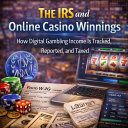
Not every casino win generates a W-2G. There are specific IRS thresholds that determine when a gambling operator is required to issue one. Slot machines have a different threshold than poker tournaments. Sports bets have different rules again. This guide lays them all out clearly.
You'll learn what each box on the form actually means, where to enter W-2G data on your 1040, how to handle multiple forms from different casinos, and what to do if you think the casino got something wrong. If federal tax was already withheld, you'll see how that affects what you owe — or whether you might be due a refund.
And critically: you'll understand that not receiving a W-2G doesn't mean the win is tax-free. The IRS requires you to report all gambling income, whether a form was issued or not.
WHAT READERS WILL LEARN
The exact IRS thresholds that trigger W-2G issuance — $1,200 for slots, $5,000 for poker, $600 for sports bets, and more
A box-by-box breakdown of everything reported on your W-2G form and what it means
Where W-2G income goes on your federal tax return (Schedule 1, Form 1040)
How federal withholding works — and how to claim it back if too much was taken
What to do if you got multiple W-2Gs from different casinos or game types in one year
How to get a corrected or duplicate form if the casino's records don't match yours
Discover more
About the author
The author is the editor of casinoonlinegaming.com greenbaycasino.com and slotbonuses.info, where they publish educational articles analyzing casino games from a mathematical and probabilistic perspective. That work focuses on game structure, probability, and common misconceptions rather than betting advice, systems, or strategies.
Writing under the Games Explained Honestly imprint, the author specializes in clear, probability-first explanations of casino games and gambling mechanics. Rather than offering methods to win or promises of outcomes, the work examines how games are designed, how probabilities are fixed, and why player experience often conflicts with mathematical reality.
The books in this series draw on publicly available information, standard principles of probability, and established concepts from game design and behavioral psychology. They are written for readers who want understanding instead of folklore, clarity instead of illusion, and explanations grounded in structure rather than belief.
The author does not provide legal advice, gambling advice, financial advice, or recommendations. All content is educational in nature and intended to help readers better interpret chance-based games and their own experiences with them.