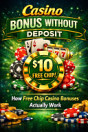
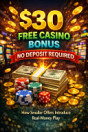
Casino Bonuses Without Deposit Explained: What “Play Without Paying” Really Means for New Players
About this ebook
But what does “play without paying” actually mean?
This book takes a closer look at how no deposit casino bonuses work from a practical perspective — focusing on what happens after you claim the offer.
Inside, you’ll learn:
What “no deposit required” actually means
How casinos structure free chip bonuses
Why wagering requirements still apply
What limits exist on withdrawals
How gameplay is affected by bonus rules
What players experience from start to finish
Using a real example of a no deposit bonus, this guide shows how the process unfolds step by step.
While these offers can be useful for exploring a casino, they are governed by rules that change how the balance behaves.
Most free casino bonus no deposit required promotions include:
wagering requirements
maximum withdrawal limits
game restrictions
expiration timelines
Understanding these rules is key to interpreting the value of the offer.
This book is ideal for:
New players exploring casino bonuses without deposit
Readers curious about no deposit casino offers
Anyone trying to understand how bonus rules work
Players who want realistic expectations before playing
This guide focuses on clarity — not hype.
Readers interested in no deposit casino bonuses, casino free chips, free casino bonus no deposit required, and casino bonuses without deposit will find this guide helpful.
Educational use only. Always verify current bonus terms.
Discover more
Ratings and reviews
About the author
The author is the editor of casinoonlinegaming.com greenbaycasino.com and slotbonuses.info, where they publish educational articles analyzing casino games from a mathematical and probabilistic perspective. That work focuses on game structure, probability, and common misconceptions rather than betting advice, systems, or strategies.
Writing under the Games Explained Honestly imprint, the author specializes in clear, probability-first explanations of casino games and gambling mechanics. Rather than offering methods to win or promises of outcomes, the work examines how games are designed, how probabilities are fixed, and why player experience often conflicts with mathematical reality.
The books in this series draw on publicly available information, standard principles of probability, and established concepts from game design and behavioral psychology. They are written for readers who want understanding instead of folklore, clarity instead of illusion, and explanations grounded in structure rather than belief.
The author does not provide legal advice, gambling advice, financial advice, or recommendations. All content is educational in nature and intended to help readers better interpret chance-based games and their own experiences with them.