About this ebook
A katana, right? Curved blade. Two hands. Dramatic draw.
Now let me tell you something that might surprise you. On the actual battlefields of feudal Japan, the katana was often a backup weapon. A last resort. The real workhorse. The weapon that killed more enemies, broke more charges, and decided more battles?
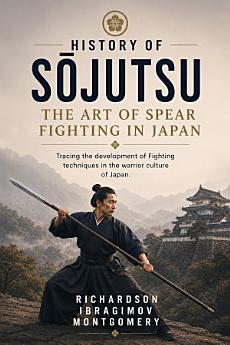
The spear. The yari. And the art of using it is called sōjutsu.
I wrote History of Sōjutsu because the spear has never gotten its due. Everyone romanticizes the sword. But ask any seasoned warrior from the Sengoku period, and they would tell you the truth. When you are facing a mounted enemy. When you are holding a formation against a wall of advancing soldiers. When you need to keep someone at a distance while you figure out your next move—you want a spear.
So let me take you back.
The book traces the origins of sōjutsu to the earliest days of samurai warfare. Unlike the naginata (curved blade on a pole), the yari was a straight blade. Simpler. Cheaper. Easier to produce. And that meant every foot soldier could carry one. The ashigaru spear formations became the backbone of Japan's armies. Rank after rank of men with long shafts, advancing together, presenting a wall of steel points that cavalry would not dare to charge.
You will learn the difference between sōjutsu and naginata and why both weapons existed side by side. The naginata swept and slashed. The yari stabbed and controlled. One was elegant. The other was brutally efficient. And on a chaotic battlefield, efficiency kept you alive.
The book dives deep into yari types. Straight. Cross-shaped (jūmonji yari). Forked. Even blades with curved hooks for pulling riders from horses. Each type demanded different sōjutsu techniques. You will discover how samurai trained to thrust with precision, to withdraw without getting trapped, and to use the butt of the spear as a club when the enemy got too close.
Then there is the tactical side. Yari combat and cavalry counter strategy was the heart of many famous battles. A well-trained spear unit could stop a mounted charge cold. The long reach meant a horseman could not get close enough to use his sword effectively. And once the horse was stopped? The spearmen would close in from both sides.
You will walk through the Sengoku period spear warfare that shaped modern Japan. Massive armies. Tens of thousands of spears. Generals who personally trained in sōjutsu schools and demanded their men do the same. The spear was not a peasant's weapon. It was a warrior's weapon. And some of the most famous names in Japanese history—Honda Tadakatsu, known as "The Warrior Who Surpassed Death"—were legendary for their skill with the yari.
Speaking of which, the book introduces you to the famous samurai spearmen whose names still echo through martial arts history. Men who could pierce three helmets with a single thrust. Who could flick a thrown spear out of the air. Whose sojutsu mastery became the stuff of legend.
You will also explore the sōjutsu schools and ryuha that preserved the art. The Hōzōin-ryu, famous for its cross-shaped spear techniques. The Saburi-ryu. The Takenouchi-ryu. These classical schools kept the yari combat traditions alive even after firearms made the spear obsolete on the battlefield.
The craftsmanship matters too. Yari craftsmanship was a specialized art. The blade had to be hard enough to pierce armor but flexible enough not to snap. The shaft had to be perfectly balanced. A poorly made spear was worse than useless—it was dangerous to its wielder.
And what about today? Sōjutsu did not die. The book traces the global spread of sōjutsu and its modern practice. Dedicated martial artists around the world still train with the yari. They practice sōjutsu kata forms, study the old scrolls, and keep the japanese spear techniques alive for a new generation. Some schools emphasize the spiritual side—sōjutsu spiritual martial traditions that blend combat with meditation.
Whether you are a Japanese martial arts history buff, a samurai weapons collector, a practitioner of koryu (classical arts), or simply someone who wants to understand why the spear was the true king of the battlefield, this book is for you.
So pick up the shaft. Extend the blade. Feel the weight of a weapon that decided the fate of nations.
The yari is waiting. And it has a story to tell.
Discover more
About the author
Richardson Ibragimov Montgomery is a lifelong martial artist, historian, and storyteller dedicated to exploring the human connection behind combat traditions. With decades of experience studying martial arts across the globe, he has immersed himself in the philosophies, struggles, and triumphs of practitioners past and present.
Born with a fascination for movement and discipline, Richardson’s journey led him from dusty dojos to serene temples, discovering not only the techniques but also the stories that define martial arts as a deeply human practice. His work focuses on breaking down barriers between styles and cultures, emphasizing the shared spirit of growth, resilience, and respect.