About this ebook
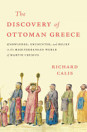
The surprising story of the sixteenth-century Lutheran scholar who became Europe’s foremost authority on Ottoman Greece, shedding new light on the place of Greek culture and religion in the Western imagination.
In the late sixteenth century, a German Lutheran scholar named Martin Crusius compiled an exceptionally rich record of Greek life under Ottoman rule. Although he never left his home in the university town of Tübingen, Crusius spent decades annotating books and manuscripts, corresponding with the Greek Orthodox Patriarch, and interviewing Greek Orthodox alms-seekers. Ultimately, he gathered his research into a seminal work called the Turcograecia, which served for centuries as Europe’s foremost source on Ottoman Greece. Yet as Richard Calis reveals, Crusius’s massive—and largely untapped—archive has much more to tell us about how early modern Europeans negotiated cultural and religious difference.
In particular, Crusius’s work illuminates Western European views of the religious “other” within Christianity: the Greek Orthodox Christians living under Ottoman rule, a group both familiar and foreign. Many Western Europeans, including Crusius, developed narratives of Greek cultural and religious decline under Ottoman rule. Crusius’s records, however, reveal in exceptional detail how such stories developed. His interactions with his Greek Orthodox visitors, and with a vast network of correspondents, show that Greeks’ own narratives of hardship entwined in complex ways with Western Europeans’ orientalist views of the Ottoman world. They also reflect the religious tensions that undergirded these exchanges, fueled by Crusius’s fervent desire to spread Lutheran belief across Ottoman Greece and the wider world.
A lively intellectual history drawn from a forgotten archive, The Discovery of Ottoman Greece is also a perceptive character study, in which Crusius takes his place in the history of ethnography, Lutheran reform, and European philhellenism.
The surprising story of the sixteenth-century Lutheran scholar who became Europe’s foremost authority on Ottoman Greece, shedding new light on the place of Greek culture and religion in the Western imagination.
In the late sixteenth century, a German Lutheran scholar named Martin Crusius compile...
Discover more
About the author
Richard Calis is Assistant Professor in Cultural History at Utrecht University, where he studies the cultural and intellectual history of the early modern world.
Richard Calis is Assistant Professor in Cultural History at Utrecht University, where he studies the cultural and intellectual history of the early modern world.
Rate this ebook
Tell us what you think.
Reading information
Smartphones and tablets
Install the Google Play Books app for Android and iPad/iPhone. It syncs automatically with your account and allows you to read online or offline wherever you are.
Laptops and computers
You can listen to audiobooks purchased on Google Play using your computer's web browser.
eReaders and other devices
To read on e-ink devices like Kobo eReaders, you'll need to download a file and transfer it to your device. Follow the detailed Help Center instructions to transfer the files to supported eReaders.