Chia: Rediscovering a Forgotten Crop of the Aztecs

·
· University of Arizona Press
Ebook
215
Pages

About this ebook

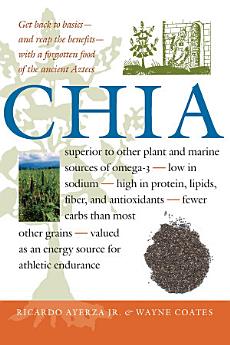
One of the four main Aztec crops at the time of Columbus’s arrival in the New World, chia is now a forgotten food of the Americas. Chia seed oil offers the highest omega-3 fatty acid content available from plants, but today this species is known only for its use in "chia pets." Yet pre-Columbian civilizations used chia as a raw material for medicines and nutritional compounds, while chia flour could be stored for years as a food reserve and was valued as a source of energy on long journeys.

In this book, agronomist Ricardo Ayerza and agricultural engineer Wayne Coates trace the long and fascinating history of chia’s use, then reveal the scientific story of the plant and its modern potential. They compare fatty acid profiles of chia with our other major sources—fish oil, flaxseed, and marine algae—and provide evidence that chia is superior in many ways.

Here are just some of the benefits that chia provides:
- chia has the highest known percentage of alpha-linolenic acid, and the highest combined alpha-linolenic and linoleic fatty acid percentage of all crops
- chia has more protein, lipids, energy, and fiber—but fewer carbs—than rice, barley, oats, wheat, or corn—and its protein is gluten-free
- chia is an excellent source of calcium, phosphorus, magnesium, potassium, iron, zinc, and copper
- chia is low in sodium: salmon has 78 times as much, tuna 237 times as much
- chia exhibits no evidence of allergic response, even in individuals with peanut and tree-nut allergies
- chia doesn’t give off a “fishy flavor,” unlike some other sources of omega-3 fatty acid

The need to balance the essential fatty acid content of the human diet, combined with the need for a safe, renewable, omega-3 fatty acid source, positions chia to become one of the world’s important crops. As this insightful study shows, current nutritional understanding provides an excellent opportunity to reintroduce this important food to the world.
One of the four main Aztec crops at the time of Columbus’s arrival in the New World, chia is now a forgotten food of the Americas. Chia seed oil offers the highest omega-3 fatty acid content available from plants, but today this species is known only for its use in "chia pets." Yet pre-Columbian ...

Discover more

About the author

Ricardo Ayerza Jr. is an Associate in Arid Lands at the University of Arizona’s Office of Arid Lands Studies and has been doing research on chia production and utilization since 1990. Wayne Coates is a Research Professor in the Office of Arid Lands Studies at the University of Arizona. His work with chia began in 1990, and he developed the system that is now used to commercially harvest and clean chia seeds.
Ricardo Ayerza Jr. is an Associate in Arid Lands at the University of Arizona’s Office of Arid Lands Studies and has been doing research on chia production and utilization since 1990. Wayne Coates is a Research Professor in the Office of Arid Lands Studies at the University of Arizona. His work w...

Rate this ebook

Tell us what you think.

Reading information

Smartphones and tablets
Install the Google Play Books app for Android and iPad/iPhone. It syncs automatically with your account and allows you to read online or offline wherever you are.
Laptops and computers
You can listen to audiobooks purchased on Google Play using your computer's web browser.
eReaders and other devices
To read on e-ink devices like Kobo eReaders, you'll need to download a file and transfer it to your device. Follow the detailed Help Center instructions to transfer the files to supported eReaders.