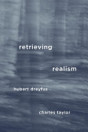
Retrieving Realism
qer 2015 · Harvard University Press
Libër elektronik
170
Faqe
Rreth këtij libri elektronik
“Compact and engaging, Retrieving Realism is more approachable than its weighty subject matter might predict...[An] adventurous combination of arguments and mixing of philosophical cultures.” —Boston Review
“A picture held us captive,” writes Wittgenstein in the Philosophical Investigations, describing the powerful image of mind that underlies the modern epistemological tradition from Descartes onward. Retrieving Realism offers a radical critique of the Cartesian epistemic picture that has captivated philosophy for too long and restores a realist view affirming our direct access to the everyday world and to the physical universe.
According to Descartes, knowledge exists in the form of ideas in the mind that purportedly represent the world. This “mediational” epistemology—internal ideas mediating external reality—continues to exert a grip on Western thought, and even philosophers such as Quine, Rorty, and Davidson who have claimed to refute Descartes remain imprisoned within its regime. As Hubert Dreyfus and Charles Taylor show, knowledge consists of much more than the explicit representations we formulate. We gain knowledge of the world through bodily engagement with it—by handling things, moving among them, responding to them—and these forms of knowing cannot be understood in mediational terms. Dreyfus and Taylor also contest Descartes’s privileging of the individual mind, arguing that much of our understanding of the world is necessarily shared.
Once we deconstruct Cartesian mediationalism, the problems that Hume, Kant, and many of our contemporaries still struggle with—trying to prove the existence of objects beyond our representations—fall away, as does the motivation for nonrealist doctrines. We can then begin to describe the background everyday world we are absorbed in and the universe of natural kinds discovered by science.
“Compact and engaging, Retrieving Realism is more approachable than its weighty subject matter might predict...[An] adventurous combination of arguments and mixing of philosophical cultures.” —Boston Review
“A picture held us captive,” writes Wittgenstein in the Philosophical Investigations, des...
Rreth autorit
Hubert Dreyfus is Professor Emeritus of Philosophy at the University of California, Berkeley.
Charles Taylor is Professor Emeritus in the Department of Philosophy at McGill University. Author of The Language Animal, Sources of the Self, The Ethics of Authenticity, and A Secular Age, he has received many honors, including the Templeton Prize, the Berggruen Prize, and membership in the Order of Canada.
Hubert Dreyfus is Professor Emeritus of Philosophy at the University of California, Berkeley.
Charles Taylor is Professor Emeritus in the Department of Philosophy at McGill University. Author of The Language Animal, Sources of the Self, The Ethics of Authenticity, and A Secular Age, he has receiv...
Vlerëso këtë libër elektronik
Na trego se çfarë mendon.
Informacione për leximin
Telefona inteligjentë dhe tabletë
Instalo aplikacionin "Librat e Google Play" për Android dhe iPad/iPhone. Ai sinkronizohet automatikisht me llogarinë tënde dhe të lejon të lexosh online dhe offline kudo që të ndodhesh.
Laptopë dhe kompjuterë
Mund të dëgjosh librat me audio të blerë në Google Play duke përdorur shfletuesin e uebit të kompjuterit.
Lexuesit elektronikë dhe pajisjet e tjera
Për të lexuar në pajisjet me bojë elektronike si p.sh. lexuesit e librave elektronikë Kobo, do të të duhet të shkarkosh një skedar dhe ta transferosh atë te pajisja jote. Ndiq udhëzimet e detajuara në Qendrën e ndihmës për të transferuar skedarët te lexuesit e mbështetur të librave elektronikë.