關於這本電子書
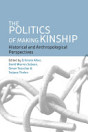
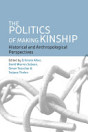
Within the social sciences, kinship and statehood are often seen as two distinct modes of social organization, sometimes conceived of as following each other in a temporal line and sometimes as operating on different scales. Kinship is traditionally associated with small-scale communities in stateless societies. The state, meanwhile, is viewed as a development away from kinship as political order toward rational, impersonal, and functional forms of rule. In recent decades, theoretical and empirical scholarship has challenged these notions, but the underlying presumption of a deep-rooted opposition between kinship and the (modern) state has remained surprisingly stable.
That this binary is so deeply engrained in Western self-understanding and knowledge production poses a considerable challenge to decoding their coproduction. Reconnecting State and Kinship seeks to trace the historical shifts and boundary work implied in the ongoing reproduction of these supposedly discrete or even opposing units of analysis. Contributors ask whether concepts associated with one sphere —including corruption, patronage, lineage, and incest—surface in the other. Policies and interventions modeled upon the assumed polarity can have lasting consequences for mechanisms of marginalization and exclusion, including decisions about life and death.
Reconnecting State and Kinship not only explores the boundary-related and classificatory practices that reinforce the kinship/statehood binary but also tracks the traveling of these concepts and their underlying norms through time and space ultimately demonstrating the ways that kinship and "the state" are intertwined.
Contributors: Erdmute Alber, Apostolos Andrikopoulos, Helle Bundgaard, Jeanette Edwards, Karen Fog Olwig, Victoria Goddard, Michael Herzfeld, Eirini Papadaki, Frances Pine, Ivan Rajković, Tatjana Thelen, Thomas Zitelmann.
Within the social sciences, kinship and statehood are often seen as two distinct modes of social organization, sometimes conceived of as following each other in a temporal line and sometimes as operating on different scales. Kinship is traditionally associated with small-scale communities in stat...
關於作者
Tatjana Thelen is Professor in the Department of Social and Cultural Anthropology, University of Vienna. Erdmute Alber is Professor of Social Anthropology at the University of Bayreuth.
Tatjana Thelen is Professor in the Department of Social and Cultural Anthropology, University of Vienna. Erdmute Alber is Professor of Social Anthropology at the University of Bayreuth.
為這本電子書評分
請分享你的寶貴意見。
閱讀資訊
智能手機和平板電腦
手提電腦和電腦
你可以使用電腦的網絡瀏覽器聆聽在 Google Play 上購買的有聲書。
電子書閱讀器及其他裝置
如要在 Kobo 等電子墨水裝置上閱覽書籍,你需要下載檔案並傳輸到你的裝置。請按照說明中心的詳細指示,將檔案傳輸到支援的電子書閱讀器。