About this ebook
How do we represent the experience of being a gender and sexual outlaw?
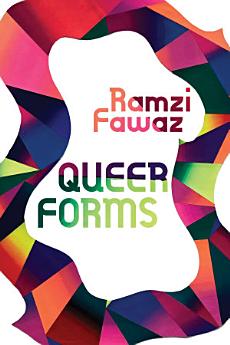
In Queer Forms, Ramzi Fawaz explores how the central values of 1970s movements for women’s and gay liberation—including consciousness-raising, separatism, and coming out of the closet—were translated into a range of American popular culture forms. Throughout this period, feminist and gay activists fought social and political battles to expand, transform, or wholly explode definitions of so-called “normal” gender and sexuality. In doing so, they inspired artists, writers, and filmmakers to invent new ways of formally representing, or giving shape to, non-normative genders and sexualities. This included placing women, queers, and gender outlaws of all stripes into exhilarating new environments—from the streets of an increasingly gay San Francisco to a post-apocalyptic commune, from an Upper East Side New York City apartment to an all-female version of Earth—and finding new ways to formally render queer genders and sexualities by articulating them to figures, outlines, or icons that could be imagined in the mind’s eye and interpreted by diverse publics.
Surprisingly, such creative attempts to represent queer gender and sexuality often appeared in a range of traditional, or seemingly generic, popular forms, including the sequential format of comic strip serials, the stock figures or character-types of science fiction genre, the narrative conventions of film melodrama, and the serialized rhythm of installment fiction. Through studies of queer and feminist film, literature, and visual culture including Mart Crowley’s The Boys in the Band (1970), Armistead Maupin’s Tales of the City (1976–1983), Lizzy Borden’s Born in Flames (1983), and Tony Kushner’s Angels in America (1989–1991), Fawaz shows how artists innovated in many popular mediums and genres to make the experience of gender and sexual non-conformity recognizable to mass audiences in the modern United States.
Against the ideal of ceaseless gender and sexual fluidity and attachments to rigidly defined identities, Queer Forms argues for the value of shapeshifting as the imaginative transformation of genders and sexualities across time. By taking many shapes of gender and sexual divergence we can grant one another the opportunity to appear and be perceived as an evolving form, not only to claim our visibility, but to be better understood in all our dimensions.
How do we represent the experience of being a gender and sexual outlaw?
In Queer Forms, Ramzi Fawaz explores how the central values of 1970s movements for women’s and gay liberation—including consciousness-raising, separatism, and coming out of the closet—were translated into a range of America...
Discover more
About the author
Ramzi Fawaz is Professor in the Department of English at the University of Wisconsin–Madison. He is the author of The New Mutants: Superheroes and the Radical Imagination of American Comics and co-editor of Keywords for Comics Studies. With Darieck Scott, he co-edited the special issue of American Literature, “Queer About Comics,” which won the 2019 best special issue award from the Council of Editors of Learned Journals.
Ramzi Fawaz is Professor in the Department of English at the University of Wisconsin–Madison. He is the author of The New Mutants: Superheroes and the Radical Imagination of American Comics and co-editor of Keywords for Comics Studies. With Darieck Scott, he co-edited the special issue of Ameri...
Rate this ebook
Tell us what you think.
Reading information
Smartphones and tablets
Install the Google Play Books app for Android and iPad/iPhone. It syncs automatically with your account and allows you to read online or offline wherever you are.
Laptops and computers
You can listen to audiobooks purchased on Google Play using your computer's web browser.
eReaders and other devices
To read on e-ink devices like Kobo eReaders, you'll need to download a file and transfer it to your device. Follow the detailed Help Center instructions to transfer the files to supported eReaders.