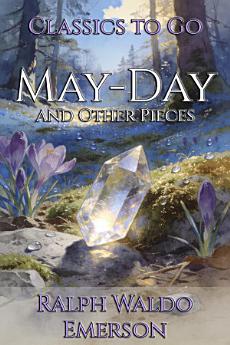
May-Day: Restored Classics to Go Edition
About this ebook
About the author
Ralph Waldo Emerson was born in Boston in 1803, the son of a minister, and after studying at Harvard he first followed the family calling before gradually becoming the leading voice of American Transcendentalism. A thinker, essayist, poet, and public lecturer, he built his reputation through a life devoted to independent thought, moral seriousness, and the belief that the individual conscience matters above convention. His writing helped shape a distinctly American literary identity, and his influence reached far beyond literature into philosophy, education, reform, and the culture of self-reliance. Emerson's work returns again and again to nature, the dignity of the self, spiritual intuition, nonconformity, and the search for truth beyond inherited systems, themes that still feel urgently modern in an age marked by noise, distraction, and pressure to conform. He wrote with a clarity and force that encouraged readers to trust their own perceptions while remaining open to the larger moral life of the world. His legacy endures because he offered not just beautiful prose and memorable poetry, but a way of thinking about freedom, responsibility, and personal integrity that continues to resonate today. Readers who enjoy reflective, idea-driven writing, inspiring prose, and literature that invites both contemplation and self-examination will find Emerson especially rewarding.