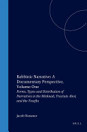
Rabbinic Narrative: A Documentary Perspective, Volume Four: The Precedent and the Parable in Diachronic View
Nov. 2021 · BRILL
E-boek
292
Bladsye
Nutsgoed
info
Meer oor hierdie e-boek
Each Rabbinic document, from the Mishnah through the Bavli, defines itself by a unique combination of indicative traits of rhetoric, topic, and particular logic that governs its coherent discourse. But narratives in the same canonical compilations do not conform to the documentary indicators that govern in these compilations, respectively. They form an anomaly for the documentary reading of the Rabbinic canon of the formative age.
To remove that anomaly, this project classifies the types and forms of narratives and shows that particular documents exhibit distinctive preferences among those types. This detailed, systematic classification of Rabbinic narrative supplies these facts concerning the classification of narratives and their regularities: [1] what are the types and forms of narrative in a given document? [2] how are these distinctive types and forms of narrative distributed across the canonical documents of the formative age, the first six centuries C.E.?
The answers for the documentary preferences are in Volumes One through Three, for the Mishnah-Tosefta, the Tannaite Midrash-compilations, and Rabbah-Midrash-compilations, respectively. Volume Four then sets forth the documentary history of each of the types of Rabbinic narrative, including the authentic narrative, the ma'aseh and the mashal. How the traits of the several types of narratives shift as the respective types move from document to document is spelled out in complete detail. This project opens an entirely new road toward the documentary analysis of Rabbinic narrative. It fills out an important chapter in the documentary hypothesis of the Rabbinic canon in the formative age.
Each Rabbinic document, from the Mishnah through the Bavli, defines itself by a unique combination of indicative traits of rhetoric, topic, and particular logic that governs its coherent discourse. But narratives in the same canonical compilations do not conform to the documentary indicators that...
Ontdek meer
Meer oor die skrywer
Jacob Neusner is Research Professor of Religion and Theology at Bard College, Annandale-on-Hudson, New York, a Life Member of Clare Hall, Cambridge University, and a Member of the Institute for Advanced Study in Princeton NJ.
Jacob Neusner is Research Professor of Religion and Theology at Bard College, Annandale-on-Hudson, New York, a Life Member of Clare Hall, Cambridge University, and a Member of the Institute for Advanced Study in Princeton NJ.
Gradeer hierdie e-boek
Sê vir ons wat jy dink.
Lees inligting
Slimfone en tablette
Installeer die Google Play Boeke-app vir Android en iPad/iPhone. Dit sinkroniseer outomaties met jou rekening en maak dit vir jou moontlik om aanlyn of vanlyn te lees waar jy ook al is.
Skootrekenaars en rekenaars
Jy kan jou rekenaar se webblaaier gebruik om na oudioboeke wat jy op Google Play gekoop het, te luister.
E-lesers en ander toestelle
Om op e-inktoestelle soos Kobo-e-lesers te lees, moet jy ’n lêer aflaai en dit na jou toestel toe oordra. Volg die gedetailleerde hulpsentrumaanwysings om die lêers na ondersteunde e-lesers toe oor te dra.