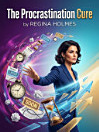
About this ebook
Kira Voss is the most feared operative in the 23rd century—not because she kills, but because she erases.
Working for the Temporal Integrity Commission, she possesses a rare genetic mutation that allows her to step outside the flow of time and surgically remove people, events, and entire movements from history.
When a target vanishes before her eyes—literally erased by someone with her same abilities—Kira uncovers a conspiracy that threatens to unravel the fabric of human civilization.
Someone is rewriting history. Someone is deleting the architects of peace, the inventors of salvation, the voices that prevented wars. And with each erasure, reality itself fractures, leaving millions to remember lives that never happened.
Racing through collapsing timelines, Kira must confront the most dangerous question of all: What if history isn't meant to be preserved? What if the greatest act of violence isn't taking a life—but convincing the universe it never existed?
A mind-bending science fiction thriller that explores memory, identity, and the terrifying power of those who control the past.
Discover more
About the author
REGINA HOLMES is a science fiction author and former temporal physics researcher who spent over a decade studying the theoretical foundations of time manipulation before turning to fiction. Her work explores the intersection of quantum physics, memory, and identity, asking the question: What does it mean to exist in a reality that can be edited?
Holmes holds a Ph.D. in Theoretical Physics from the University of Geneva, where she researched quantum resonance patterns in temporal displacement theory. Her academic work was published in numerous journals before she transitioned to fiction, bringing her deep understanding of temporal mechanics to her storytelling.
The Assassin Erases the Existence of History is her debut novel. She is currently working on the sequel, The Weaver of Collapsed Timelines, which continues the story of Kira and Elara Voss in the woven timeline.
Holmes lives in Neo-Prague with her two cats and an extensive collection of physics textbooks that she insists are "totally necessary for research."