THE ABUNDANCE LIFE
About this ebook
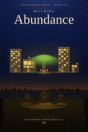
Drawing on forty years of clinical practice with children, adolescents, and families - including frontline work with the most seriously ill children in the public mental health system - Dr. Bhalla offers both a practical clinical guide and a broader civilizational argument. The two are inseparable: what happens in the clinician's room reflects what the system surrounding that room has chosen to provide or withhold.
The book is organized in five parts corresponding to five life stages: the early years (birth to age eight), the middle years (ages eight to eighteen), young adulthood (ages eighteen to thirty-five), midlife (ages thirty-five to sixty-five), and posterity (sixty-five and beyond). Each part integrates developmental science, clinical guidance, and policy analysis. Topics range from secure attachment and language acquisition to IEP advocacy, adolescent mental health, perimenopause, male midlife health, elder care, and end-of-life planning.
The book introduces the Abundance Fund - a proposed universal birth-to-posterity investment account seeded by government, employer, and philanthropic contributions, compounding across a lifetime - and argues that the passage of Trump Accounts in 2025 has already established the architecture's first layer. Includes a practical appendix with developmental milestone charts, red-flag clinical references, IEP and 504 guidance, crisis resources, and detailed Abundance Fund financial architecture.
For parents, clinicians, educators, policymakers, and anyone interested in what a genuine commitment to children and posterity would require.
Discover more
About the author
Ravinder Nath Bhalla, MD is a board-certified adult, adolescent, and child psychiatrist who practiced for forty years in northern New Jersey. A colleague once greeted him for years with a comic salute and the title of General — a reference to the frontline psychiatric work he did with the most seriously ill children and adolescents in the public mental health system, many of whom had been failed by every preceding institution before they reached his office.
He is the author of The Abundance Series, a seven-volume examination of scarcity orientation across individual, institutional, and civilizational scales. Previous volumes address the psychology of abundance, AI governance, the constitutional floor missing beneath American children, and the policy architecture required to build what has been withheld. The Abundance Life is the final volume and the one he was working toward from the beginning.
He lives in New Jersey.