About this ebook
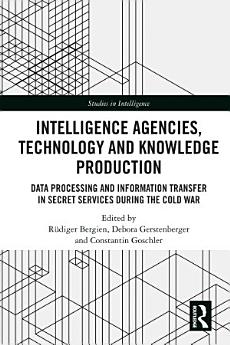
Intelligence agencies are producers and providers of arcane information. However, little is known about the social, cultural and material dimensions of their knowledge production, processing and distribution. This volume starts from the assumption that during the Cold War, these core activities of information services underwent decisive changes, of which scientization and computerisation are essential. With a focus on the emerging alliances between intelligence agencies, science and (computer) technology, the chapters empirically explore these transformations and are characterised by innovative combinations of intelligence history with theoretical considerations from the history of science and technology and the history of knowledge.
At the same time, the book challenges the bipolarity of Cold War history in general and of intelligence history in particular in favour of comparative and transnational perspectives. The focus is not only the Soviet Union and the United States, but also Poland, Turkey, the two German states and Brazil. This approach reveals surprising commonalities across systems: time and again, the expansion and use of intelligence knowledge came up against the limits that resulted from intelligence culture itself. The book enriches our global understanding of knowledge of the state and contributes to a historical framework for the past decade of debates about the societal consequences of intelligence data processing.
This book will be of much interest to students of intelligence studies, science and technology studies, security studies and International Relations.
Discover more
About the author
Rüdiger Bergien is a Professor of Intelligence History at the Federal University for Applied Administrative Sciences, Germany.
Debora Gerstenberger is Assistant Professor for Latin American History at the Institute for Latin American Studies, Freie Universität Berlin, Germany.
Constantin Goschler is Professor for Contemporary History at the Ruhr-University Bochum, Germany, and is currently directing a research group on 'Security, Democracy and Transparency'.