អំពីសៀវភៅអេឡិចត្រូនិកនេះ
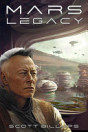
Recap of MARS LEGACY - Book #1
The initial colonization of Mars exceeded all expectations; a genuine triumph of one man's vision and relentless dedication to scientific progress. But as greed took hold and nations fought for their slice of the pie, the bold endeavor turned into a deadly mess.
With advanced AI and an abundant workforce, the task of rebuilding the fledgling colonies should have been simple, but humans just aren’t made that way. Tragic losses and financial ruin plagued the endeavor until the United Nations formed the Joint Academic Research and Development Organization (JARDO) and chose world-renowned scientist Marvin Dryer to head it up.
Armed with the authority to handpick the best and brightest minds, Dr. Dryer assembled a team of brilliant young scientists, each with their own unique set of strengths and personal peccadilloes.
Dr. Lauren Sommers, the world’s leading AI scientist, and her quirky AI sidekick, SAMI, quickly formed an incontrovertible authority on the red dust ball. Tasked with colonizing the Valles Mariners after her former fiancé is murdered, Lauren relies on SAMI’s unwavering focus to keep the Mars project on track.
Fresh off his Nobel Prize-winning discovery of faster-than-light communications, Dr. Bradley Yeager, widely regarded as the young Howard Hughes of advanced science, arrives at Mars a few weeks ahead of his offbeat team.
Together on Mars, with the world’s fastest quantum computer and an idiosyncratic synthetic cognizance named Quattro, they’ve just discovered a signal that comes from another solar system. It is a signal that is about to change everything
“Stand aside, Douglas Adams and Kurt Vonnegut; Scott Billups has more mind-blowing ideas than you can shake a particle beam at.”
Brian McKernan
Former Editor - OMNI Magazine
Back in 1993, Stan Lee and Roger Corman asked if I could help them make a superhero movie for under a million dollars. We made the original Fantastic Four for less than the catering budget of my next movie. After that, Stan came to me from time to time with various technology-related questions and ideas. With the sale of Marvel to Disney, he could see his superhero universe slipping deeper into fantasy. He had an idea to update the genre with a whole alternative universe of superheroes for the quantum age.
His idea was simple: develop a story about superheroes who save the world using actual science. They face threats on the same scale as those found in science fantasies, but they win their battles through technical intelligence rather than unexplained supernatural powers.
After his death, Stan Lee Entertainment and the Stan Lee estate asked if I would help revive that vision. The script I wrote was a bold departure from the current fantasy-based superhero genre, but people with more lawyers and deeper pockets than me felt that it would interfere with the Stan Lee brand - so I decided to write this book.
This is the origin story for a new superhero universe. It is full of real and emerging science because that was Stan’s idea.
ស្វែងរកច្រើនទៀត
អំពីអ្នកនិពន្ធ
Scott Billups divides his time between the motion picture industry and the defense/aerospace sector, frequently serving as a consultant or team member on initiatives for NASA, DARPA, Lockheed Martin, Boeing, and other NGO contractors.
In addition to serving as Chief Technical Officer for the game industry’s leading supplier of AI, Scott is an award-winning cinematographer, visual effects creator, game developer, and author of several best-selling books on cutting-edge media production. When he's not working, you can generally find him sailing, surfing, or skiing.
Scott’s long list of innovations has earned him a reputation for what WIRED Magazine calls, "Hollywood's baddest pixel-packing cowboy, riding the fringes of an industry that views him with interest, admiration, and some degree of incomprehension."