Sobre aquest llibre
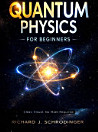
This book focuses on quantum machine learning that harnesses the collective properties of quantum states, such as superposition, interference, and entanglement, uses algorithms run on quantum devices, such as quantum computers, to supplement, expedite, or support the work performed by a classical machine learning program. The devices that perform quantum computations are known as quantum computers. Quantum computers have the potential to revolutionize computation by making certain types of classically intractable problems solvable. A few large companies and small start-ups now have functioning non-error-corrected quantum computers composed of several tens of qubits, and some of these are even accessible to the public through the cloud. Additionally, quantum simulators are making strides in fields varying from molecular energetics to many-body physics. Most known use cases fit into four archetypes: quantum simulation, quantum linear algebra for AI and machine learning, quantum optimization and search, and quantum factorization. Advantages of quantum computing are many and to list a few, first, they’re fast. Ultimately, quantum computers have the potential to provide computational power on a scale that traditional computers cannot ever match. In 2019, for example, Google claimed to carry out a calculation in about 200 seconds that would take a classical supercomputer around 10,000 years. Second, they can solve complex problems. The more complex a problem, the harder it is for even a supercomputer to solve. When a classical computer fails, it’s usually because of a huge degree of complexity and many interacting variables. However, due to the concepts of superposition and entanglement, quantum computers can account for all these variables and complexities to reach a solution. Last but not the least, they can run complex simulations. The speed and complexity that quantum computing can achieve means that, in theory, a quantum computer could simulate many intricate systems.
This book focuses on quantum machine learning that harnesses the collective properties of quantum states, such as superposition, interference, and entanglement, uses algorithms run on quantum devices, such as quantum computers, to supplement, expedite, or support the work performed by a classical...
Descobreix-ne més
Puntua aquest llibre electrònic
Dona'ns la teva opinió.
Informació de lectura
Telèfons intel·ligents i tauletes
Instal·la l'aplicació Google Play Llibres per a Android i per a iPad i iPhone. Aquesta aplicació se sincronitza automàticament amb el compte i et permet llegir llibres en línia o sense connexió a qualsevol lloc.
Ordinadors portàtils i ordinadors de taula
Pots escoltar els audiollibres que has comprat a Google Play amb el navegador web de l'ordinador.
Lectors de llibres electrònics i altres dispositius
Per llegir en dispositius de tinta electrònica, com ara lectors de llibres electrònics Kobo, hauràs de baixar un fitxer i transferir-lo al dispositiu. Segueix les instruccions detallades del Centre d'ajuda per transferir els fitxers a lectors de llibres electrònics compatibles.