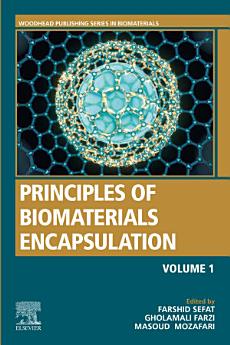
Principles of Biomaterials Encapsulation: Volume One

· ·
· Woodhead Publishing
E-grāmata
508
Lappuses
Piemērota

Par šo e-grāmatu

Principles of Biomaterials Encapsulation: Volume One, provides an expansive and in-depth resource covering the key principles, biomaterials, strategies and techniques for encapsulation. Volume One begins with an introduction to encapsulation, with subsequent chapters dedicated to a broad range of encapsulation principles and techniques, including spray chilling and cooling, microemulsion, polymerization, extrusion, cell microencapsulation and much more. This book methodically details each technique, assessing the advantages and disadvantages of each, allowing the reader to make an informed decision when using encapsulation in their research. Principles of Biomaterials Encapsulation: Volume One enables readers to learn about the various strategies and techniques available for encapsulation of a wide selection of biomedical substrates, such as drugs, cells, hormones, growth factors and so on. Written and edited by well-versed materials scientists with extensive clinical, biomedical and regenerative medicine experience, this book offers a deeply interdisciplinary look at encapsulation in translational medicine. As such, this book will provide a useful resource to a broad readership, including those working in the fields of materials science, biomedical engineering, regenerative and translational medicine, pharmacology, chemical engineering and nutritional science. - Details the various biomaterials available for encapsulation, as well as advantages and disadvantages of conventional and contemporary biomaterials for encapsulations - Describes a broad range of applications in regenerative medicine, uniquely bringing encapsulation into the worlds of translational medicine and tissue engineering - Written and edited by well-versed materials scientists with extensive clinical, biomedical and regenerative medicine experience, offering an interdisciplinary approach
Principles of Biomaterials Encapsulation: Volume One, provides an expansive and in-depth resource covering the key principles, biomaterials, strategies and techniques for encapsulation. Volume One begins with an introduction to encapsulation, with subsequent chapters dedicated to a broad range of...

Citas grāmatas

Par autoru

Farshid Sefat is an Associate Professor in Biomedical Engineering and Regenerative Medicine and a Programme Leader at the University of Bradford. He previously headed the Biomedical Engineering Department at King Faisal University. His research focuses on regenerative medicine, tissue engineering, biomaterials, and stem cell biology, particularly the development of engineered materials that influence cellular behaviour and support tissue repair. His work also includes corneal tissue engineering, academic leadership, and international research collaboration.

Dr. Gholamali Farzi is a Professor of Polymer Engineering at Faculty of Engineering in Hakim Sabzevari University, Sabzevar, Iran, where he is teaching polymer engineering and polymer composite materials for students in Ph.D. and MSc level. Dr. Farzi obtained his Ph.D. from the University of Lyon (France) in 2007, then he completed his post-doctoral fellowship in University of Lyon 1. Dr Farzi doing extensive research in the field of polymer encapsulation and he has very close collaboration with French universities.

Dr. Masoud Mozafari is a Fellow at Lunenfeld Tanenbaum Research Institute, Mount Sinai Health Hospital, University of Toronto. He was previously Assistant Professor and Director of the Bioengineering Lab, at the Nanotechnology and Advanced Materials Department, Materials and Energy Research Center, Cellular and Molecular Research Center, and Department of Tissue Engineering and Regenerative Medicine of the Iran University of Medical Sciences (IUMS), Tehran, Iran. Dr. Mozafari’s research interests range across biomaterials, nanotechnology, and tissue engineering, and he is known for the development of strategies for the treatment of damaged tissues and organs, and controlling biological substances for targeted delivery into the human body. Dr. Mozafari has received several awards, including the Khwarizmi Award and the Julia Polak European Doctorate Award for outstanding translational research contributions to the field of biomaterials. He has also received the WIPO Medal for Inventors from The World Intellectual Property Organization (WIPO), in recognition of his contributions to economic and technological development. Dr. Mozafari is currently working on the editorial board of several journals.
Farshid Sefat is an Associate Professor in Biomedical Engineering and Regenerative Medicine and a Programme Leader at the University of Bradford. He previously headed the Biomedical Engineering Department at King Faisal University. His research focuses on regenerative medicine, tissue engineering...

Novērtējiet šo e-grāmatu

Izsakiet savu viedokli!

Informācija lasīšanai

Viedtālruņi un planšetdatori
Instalējiet lietotni Google Play grāmatas Android ierīcēm un iPad planšetdatoriem/iPhone tālruņiem. Lietotne tiks automātiski sinhronizēta ar jūsu kontu un ļaus lasīt saturu tiešsaistē vai bezsaistē neatkarīgi no jūsu atrašanās vietas.
Klēpjdatori un galddatori
Varat klausīties pakalpojumā Google Play iegādātās audiogrāmatas, izmantojot datora tīmekļa pārlūkprogrammu.
E-lasītāji un citas ierīces
Lai lasītu grāmatas tādās elektroniskās tintes ierīcēs kā Kobo e-lasītāji, nepieciešams lejupielādēt failu un pārsūtīt to uz savu ierīci. Izpildiet palīdzības centrā sniegtos detalizētos norādījumus, lai pārsūtītu failus uz atbalstītiem e-lasītājiem.