Bu e-kitab haqqında
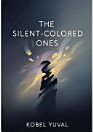
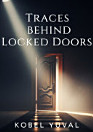
The world, as I first understood it, was made of portraits—faces framed by light and shadow, suspended in the air as if waiting to be named. My earliest memories are not of places, or sounds, or even touch, but of faces: my mother’s worried brow, my father’s stern gaze, the faded photograph of a grandfather I never met, tucked into the edge of a dusty mirror. The faces were everywhere: in the living room, staring out from gilded frames; in the hallway, caught in the glassy sheen of old photographs; in the attic, their expressions half-erased by dust and time. There is something about a portrait that defies the ordinary passage of time. It is a record of a single moment, a piece of evidence that a person once existed exactly as they were—hair parted just so, smile uncertain, eyes fixed on a point that remains forever just out of reach. As a child, I used to wonder if these faces knew they were being watched, if they could see me as clearly as I saw them. Sometimes, in the blue hush of evening, I would hold my breath and listen for the sound of their voices, for the secret stories they kept folded beneath their silent surfaces. Our house was full of such ghosts. My parents called them ancestors, and spoke of them with reverence—names spoken softly, as if not to disturb the weight of their absence. But to me, they were more real than the people I met in the waking world. I would press my nose to the glass, tracing the contours of a jaw, the slope of a cheek, the depth of a dimple. I collected their names like talismans, reciting them in the dark when sleep would not come. By day, the house was a place of order and routine: my father rising before dawn to drink his coffee in silence, my mother moving from room to room with a rag and a pail, scrubbing away the traces of yesterday. My siblings and I orbited each other in uneasy truce, our arguments rising and falling like the tide. But at night, when the world grew quiet and the shadows lengthened across the floor, the portraits took on a new life. They seemed to watch us, to lean forward in their frames as if waiting for us to speak. It was in those shadows that I first learned the meaning of uniformity—the way a family, a community, even a nation, could impose order on chaos, could arrange the disparate elements of life into neat rows and columns. Uniforms appeared early in my life: my father’s police blues, pressed and hung with care in the closet; my mother’s starched apron, tied tight around her waist; my own school blazer, heavy with the scent of chalk and sweat. Uniforms promised belonging, a place in a larger story, a way to hide the trembling uncertainty beneath the surface. But there was always another side to the story—a shadow that clung to the edges of the light. For every portrait hung with pride, there was another hidden in a drawer, a face turned to the wall. For every uniform worn with honor, there was someone who had disappeared, who had slipped through the cracks of memory and vanished into silence. The house, for all its order, was full of secrets, and the portraits were the gatekeepers. I learned early to read the signs: the way my father’s jaw tightened when certain names were mentioned, the way my mother’s eyes grew distant when she dusted the frames. There were stories that could not be told in daylight, stories that belonged to the hush of midnight and the flicker of candlelight. I became a collector of these stories, piecing them together from scraps and whispers, from the things left unsaid. One night, unable to sleep, I crept from my bed and wandered the house in the dark. The portraits loomed above me, their eyes gleaming in the faint light from the street. I felt their presence as a weight on my shoulders, a silent audience to my every move. I found myself drawn to the attic, to the trunk where my mother kept the oldest photographs. I lifted the lid and sifted through the brittle images—soldiers in foreign fields, women in mourning black, children frozen in the act of laughter. It was there, among the dust and shadows, that I found the photograph that would change everything: a young man in a crisp uniform, his face half in shadow, his eyes unreadable. There was something in his expression that caught me—a challenge, a sorrow, a secret. He did not look like the others. There was no name written on the back, only a date and a single word: “Home.” I stared at the photograph for a long time, trying to imagine the life that lay beyond the frame. Who was he? What had he seen, what had he lost? Why had his name been erased, his story left untold? I slipped the photograph into my pocket and carried it with me, a silent companion through the days and weeks that followed. From that moment, the house seemed to shift around me. The portraits were no longer just images, but questions—silent witnesses to a history I did not yet understand. I watched my family with new eyes, searching for clues in the way they moved, the words they chose, the silences they guarded. I listened for the stories behind the uniforms, the shadows behind the smiles. It was not long before I learned that every family has its secrets, its locked rooms, its hidden sorrows. The portraits were only the beginning—a map of the visible, a guide to the unseen. I began to seek out the stories that lingered in the corners of the house: the whispers in the kitchen after dark, the letters tucked into drawers, the half-remembered songs hummed beneath my mother’s breath. I became a detective, piecing together the fragments of a lost world. In time, I came to understand that the shadows are not something to be feared, but something to be honored. They are the traces of those who came before, the reminders of the costs and choices that shape our lives. The uniform is both a shield and a mask, a symbol of unity and a reminder of the loneliness that can come with duty. The portrait is not just a relic of the past, but a mirror held up to the present—a challenge to see ourselves as we are, and as we might become. The story I am about to tell is not a history, nor a confession, nor a work of fiction. It is a mosaic of memory and imagination, of truth and invention, woven from the threads of my own life and the lives of those who have shaped me. It is a journey through the rooms and corridors of a house haunted by portraits, a search for meaning in the shadows cast by uniforms, a meditation on the ways we remember and forget. Each chapter is a doorway, a threshold to a new room, a new story. Some doors will open easily, others will resist. Some stories will be familiar, others strange. But all are part of the same tapestry, the same uneasy dance between light and shadow, between order and chaos, between the self and the world. I invite you to walk with me through these rooms, to linger in the half-light, to listen for the voices that linger in the corners. Bring your own memories, your own questions, your own shadows. The portraits are waiting.
The world, as I first understood it, was made of portraits—faces framed by light and shadow, suspended in the air as if waiting to be named. My earliest memories are not of places, or sounds, or even touch, but of faces: my mother’s worried brow, my father’s stern gaze, the faded photograph of a ...
Müəllif haqqında
Kobel Yuval is a writer and artist drawn to the fractures in language, power, and identity. Their work often explores the spaces between states—be they linguistic, psychological, or political—and the hidden architectures of control that shape human lives. With a background that informs a deep engagement with the textures of English and Russian, Yuval crafts narratives that are as much felt experiences as they are read stories. They are interested in the ghosts of memory, the weight of silence, and the unsettling beauty found in stark, bureaucratic landscapes.
Learning is their debut novel.
Kobel Yuval is a writer and artist drawn to the fractures in language, power, and identity. Their work often explores the spaces between states—be they linguistic, psychological, or political—and the hidden architectures of control that shape human lives. With a background that informs a deep eng...
Bu e-kitabı qiymətləndirin
Fikirlərinizi bizə deyin
Məlumat oxunur
Smartfonlar və planşetlər
Android və iPad/iPhone üçün Google Play Kitablar tətbiqini quraşdırın. Bu hesabınızla avtomatik sinxronlaşır və harada olmağınızdan asılı olmayaraq onlayn və oflayn rejimdə oxumanıza imkan yaradır.
Noutbuklar və kompüterlər
Kompüterinizin veb brauzerini istifadə etməklə Google Play'də alınmış audio kitabları dinləyə bilərsiniz.
eReader'lər və digər cihazlar
Kobo eReaders kimi e-mürəkkəb cihazlarında oxumaq üçün faylı endirməli və onu cihazınıza köçürməlisiniz. Faylları dəstəklənən eReader'lərə köçürmək üçün ətraflı Yardım Mərkəzi təlimatlarını izləyin.