Información sobre este eBook
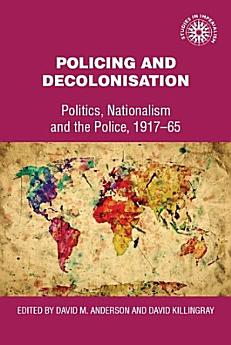
As imperial political authority was increasingly challenged, sometimes with violence, locally recruited police forces became the front-line guardians of alien law and order. This book presents a study that looks at the problems facing the imperial police forces during the acute political dislocations following decolonization in the British Empire. It examines the role and functions of the colonial police forces during the process of British decolonisation and the transfer of powers in eight colonial territories. The book emphasises that the British adopted a 'colonial' solution to their problems in policing insurgency in Ireland. The book illustrates how the recruitment of Turkish Cypriot policemen to maintain public order against Greek Cypriot insurgents worsened the political situation confronting the British and ultimately compromised the constitutional settlement for the transfer powers. In Cyprus and Malaya, the origins and ethnic backgrounds of serving policemen determined the effectiveness which enabled them to carry out their duties. In 1914, the Royal Irish Constabulary (RIC) of Ireland was the instrument of a government committed to 'Home Rule' or national autonomy for Ireland. As an agency of state coercion and intelligence-gathering, the police were vital to Britain's attempts to hold on to power in India, especially against the Indian National Congress during the agitational movements of the 1920s and 1930s. In April 1926, the Palestine police force was formally established. The shape of a rapidly rising rate of urban crime laid the major challenge confronting the Kenya Police.
As imperial political authority was increasingly challenged, sometimes with violence, locally recruited police forces became the front-line guardians of alien law and order. This book presents a study that looks at the problems facing the imperial police forces during the acute political dislocat...
Descubre más
Valorar este eBook
Danos tu opinión.
Información sobre cómo leer
Smartphones y tablets
Instala la aplicación Google Play Libros para Android y iPad/iPhone. Se sincroniza automáticamente con tu cuenta y te permite leer contenido online o sin conexión estés donde estés.
Ordenadores portátiles y de escritorio
Puedes usar el navegador web del ordenador para escuchar audiolibros que hayas comprado en Google Play.
eReaders y otros dispositivos
Para leer en dispositivos de tinta electrónica, como los lectores de libros electrónicos de Kobo, es necesario descargar un archivo y transferirlo al dispositivo. Sigue las instrucciones detalladas del Centro de Ayuda para transferir archivos a lectores de libros electrónicos compatibles.