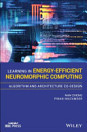
Lectures on Digital Design Principles

· CRC Press
Ebook
280
Pages
Eligible

About this ebook

Lectures on Digital Design Principles provides students an accessible reference for engaging with the building blocks of digital logic design. The book is an aggregation of lectures for an introductory course and provides a conversational style to better engage with students. Since the text is developed from lectures, important and foundational concepts are highlighted without tedious proofs. With respect to subject matter, students are introduced to different methods of abstracting digital systems, along with the strengths and weaknesses of these different methods. For example, Boolean logic can be represented as algebraic equations, gate level diagrams, switching circuits, truth tables, etc. Strengths and drawbacks to these representations are discussed in the context of Boolean minimization and electronic design automation. The text also delves into dynamic behavior of digital circuits with respect to timing in combinational circuits and state transitions in sequential circuits.
Lectures on Digital Design Principles provides students an accessible reference for engaging with the building blocks of digital logic design. The book is an aggregation of lectures for an introductory course and provides a conversational style to better engage with students. Since the text is de...

Discover more

About the author

Pinaki Mazumder is currently a Professor with the Department of Electrical Engineering and Computer Science, University of Michigan (UM), Ann Arbor. He was for six years with industrial R&D centers that included AT&T Bell Laboratories, where in 1985 he started the CONES Project the first C modeling-based very large scale integration (VLSI) synthesis tool at India’s premier electronics company, Bharat Electronics, Ltd, India. Here, he developed several high-speed and high-voltage analog integrated circuits intended for consumer electronics products. He is the author or coauthor of more than 200 technical papers and four books on various aspects of VLSI research works. His current research interests include current problems in nanoscale CMOS VLSI design, computer-aided design tools, and circuit designs for emerging technologies, including quantum MOS and resonant tunneling devices, semiconductor memory systems, and physical synthesis of VLSI chips. Dr. Mazumder is a Fellow of the American Association for the Advancement of Science (2008). He is a recipient of the Digitals Incentives for Excellence Award, BF Goodrich National Collegiate Invention Award, and Defense Advanced Research Projects Agency Research Excellence Award.

Idongesit E. Ebong, Ph.D. is a patent agent at Nixon Peabody in Chicago. He practices in the technical areas of electrical, computer, and mechanical engineering. He received his Ph.D. degree in electrical engineering from the University of Michigan, Ann Arbor. His research areas included digital/analog integrated circuit design, focused primarily on non-traditional devices like memristors and tunneling transistors for low power applications. Leveraging his background, he helps clients protect inventions in computer architecture and networks, digital and analog circuits, software systems, microfabrication equipment design, MEMS sensors, machine learning, and telecommunications.
Pinaki Mazumder is currently a Professor with the Department of Electrical Engineering and Computer Science, University of Michigan (UM), Ann Arbor. He was for six years with industrial R&D centers that included AT&T Bell Laboratories, where in 1985 he started the CONES Project the first C modeli...

Rate this ebook

Tell us what you think.

Reading information

Smartphones and tablets
Install the Google Play Books app for Android and iPad/iPhone. It syncs automatically with your account and allows you to read online or offline wherever you are.
Laptops and computers
You can listen to audiobooks purchased on Google Play using your computer's web browser.
eReaders and other devices
To read on e-ink devices like Kobo eReaders, you'll need to download a file and transfer it to your device. Follow the detailed Help Center instructions to transfer the files to supported eReaders.