About this ebook
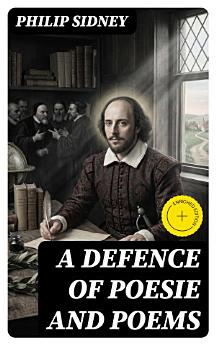
In "A Defence of Poesie and Poems," Philip Sidney masterfully articulates the inherent value and significance of poetry as an art form. Written in the late 16th century, this seminal work blends prose and verse to argue for poetry's capacity to inspire virtue and moral integrity, positioning it as a crucial vehicle for both artistic expression and societal reform. Sidney's eloquent style, marked by rich imagery and eloquent rhetoric, reflects the Northern Renaissance's ideals while addressing the tension between classical influences and emerging vernacular traditions. His assertions are not merely theoretical; they resonate with the cultural and philosophical inquiries of his time, particularly in response to contemporary critiques of poetry's purpose and value. Philip Sidney (1554-1586), a courtier, soldier, and poet, was immersed in the complexities of the Elizabethan cultural milieu. His experiences in court and his palpable passion for literature profoundly informed his defense of poetry. Sidney's personal struggles with the limitations of his social position and the political arena inspired him to emphasize poetry's potential for freedom of expression and its role in shaping moral character, thus reflecting the Renaissance spirit of exploration and innovation. "A Defence of Poesie and Poems" is an essential read for anyone seeking to delve into the philosophical underpinnings of literature and its social impact. It invites readers to appreciate not only the craft of poetry but also its transformative power, making it a vital work for both scholars and poetry enthusiasts alike. In this enriched edition, we have carefully created added value for your reading experience: - An Introduction draws the threads together, discussing why these diverse authors and texts belong in one collection. - Historical Context explores the cultural and intellectual currents that shaped these works, offering insight into the shared (or contrasting) eras that influenced each writer. - A combined Synopsis (Selection) briefly outlines the key plots or arguments of the included pieces, helping readers grasp the anthology's overall scope without giving away essential twists. - A collective Analysis highlights common themes, stylistic variations, and significant crossovers in tone and technique, tying together writers from different backgrounds. - Reflection questions encourage readers to compare the different voices and perspectives within the collection, fostering a richer understanding of the overarching conversation.
In "A Defence of Poesie and Poems," Philip Sidney masterfully articulates the inherent value and significance of poetry as an art form. Written in the late 16th century, this seminal work blends prose and verse to argue for poetry's capacity to inspire virtue and moral integrity, positioning it a...
About the author
Sir Philip Sidney (1554–1586) was a renowned English poet, courtier, and soldier, hailed as one of the most prominent figures of the Elizabethan Age. His literary contributions, which embodied the Renaissance man's ideals, have left a lasting impact on English literature. Sidney's seminal work, 'A Defence of Poesie' (also known as 'An Apology for Poetry'), is a robust and eloquent treatise that stands as a foundational text in the poetics of English literature. In it, Sidney famously defended the value of poetry against the criticisms of his time, articulating the poet's role in society and the moral and educative functions of art. His collection of poetry, simply titled 'Poems,' reflects the depth of his literary skills, showcasing his mastery in various verse forms and his exploration of themes such as love, virtue, and beauty. Sidney's literary style is marked by wit, eloquence, and inventiveness, traits that have made his work enduringly influential. He died young, at the age of 32, yet his writings continue to be studied and admired for their artistic merit and intellectual insight. Sidney's legacy as a poet and thinker remains deeply embedded in the Western literary canon, as attested by the ongoing scholarly engagement with his works.
Sir Philip Sidney (1554–1586) was a renowned English poet, courtier, and soldier, hailed as one of the most prominent figures of the Elizabethan Age. His literary contributions, which embodied the Renaissance man's ideals, have left a lasting impact on English literature. Sidney's seminal work, '...
Rate this ebook
Tell us what you think.
Reading information
Smartphones and tablets
Install the Google Play Books app for Android and iPad/iPhone. It syncs automatically with your account and allows you to read online or offline wherever you are.
Laptops and computers
You can listen to audiobooks purchased on Google Play using your computer's web browser.
eReaders and other devices
To read on e-ink devices like Kobo eReaders, you'll need to download a file and transfer it to your device. Follow the detailed Help Center instructions to transfer the files to supported eReaders.