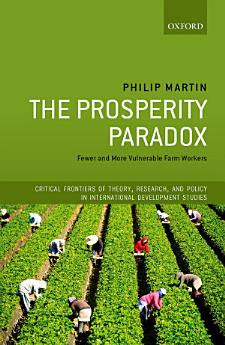
The Prosperity Paradox: Fewer and More Vulnerable Farm Workers
Nov 2020 · Oxford University Press
Ebook
224
Pages
Tools
info
family_home
Eligible
info
About this ebook
Why do farm workers become more vulnerable as countries get richer? As countries get richer, the share of workers employed in agriculture falls. In richer countries, hired farm workers do ever more of the work on the fewer and larger farms that produce most farm commodities. These hired workers are among the most vulnerable. They include local workers who lack the skills and contacts needed to get nonfarm jobs that usually offer higher wages and more opportunities as well as legal and unauthorized migrants from poorer countries who may not know or exercise their labor-related rights. Government enforcement of labor laws depends on complaints, and vulnerable workers rarely complain. The Prosperity Paradox explains why farm worker problems often worsen as the agricultural sector shrinks, and lays out options to help vulnerable workers. Analysis of farm labor markets in the US, Mexico, and other countries shows that unions and fair trade efforts to protect farm workers cover a very small share of all workers and are unlikely to expand quickly. Most labor-intensive fruits and vegetables are eaten fresh. Unsafe food that sickened consumers led to voluntary industry and later government-mandated food safety programs to ensure that food is safe when it leaves the farm, with protocols enforced by both government inspectors and buyers who refused to buy from non-compliant farms. This food safety model offers the most promise to launch a new era in protective labor policies.
Why do farm workers become more vulnerable as countries get richer? As countries get richer, the share of workers employed in agriculture falls. In richer countries, hired farm workers do ever more of the work on the fewer and larger farms that produce most farm commodities. These hired workers a...
Discover more
About the author
Philip Martin is Professor of Agricultural and Resource Economics at the University of California-Davis. He edits Rural Migration News (http://migration.ucdavis.edu), has served on several federal commissions, testifies frequently before Congress, and works for UN agencies around the world on labor and migration issues. Martin is an award-winning author whose research focuses on the impacts of migrant workers on labor markets in destination countries, the effects of emigration and remittances on sending countries, and the recruitment business that moves workers over borders.
Philip Martin is Professor of Agricultural and Resource Economics at the University of California-Davis. He edits Rural Migration News (http://migration.ucdavis.edu), has served on several federal commissions, testifies frequently before Congress, and works for UN agencies around the world on lab...
Rate this ebook
Tell us what you think.
Reading information
Smartphones and tablets
Install the Google Play Books app for Android and iPad/iPhone. It syncs automatically with your account and allows you to read online or offline wherever you are.
Laptops and computers
You can listen to audiobooks purchased on Google Play using your computer's web browser.
eReaders and other devices
To read on e-ink devices like Kobo eReaders, you'll need to download a file and transfer it to your device. Follow the detailed Help Center instructions to transfer the files to supported eReaders.