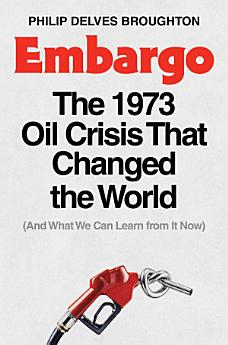
Embargo: The 1973 Oil Crisis That Changed the World (And What We Can Learn from It Now)
Nov 2026 · Sold by Simon and Schuster
Ebook
384
Pages
family_home
Eligible
info
infoThis book will become available on November 17, 2026. You will not be charged until it is released.
About this ebook
The definitive account of how the 1973–1974 oil embargo rewired the world forever—and the lessons to be learned today.
The king of Saudi Arabia had warned the Americans repeatedly: if you do not treat us with respect, we will cut off your oil. For years, nobody believed him. In October 1973, he made good on his threat.
The consequences were immediate. In America, fuel rationing and a 55 MPH emergency speed limit couldn’t stop the lights of Times Square flickering out by Christmas. With the Watergate scandal closing in, President Richard Nixon, and his secretary of state, Henry Kissinger, scrambled to secure peace in the Middle East and restart the flow of oil. Senior ministers from around the world flew to St Moritz to interrupt the Shah of Iran’s skiing holiday and beg for oil to keep their countries running.
Embargo is the gripping inside story of the 1973–1974 oil crisis and the small group of leaders who strode into chaos to build a new, imperfect order. It is the story of Faisal, the Saudi king, born to the desert chieftain who created modern Saudi Arabia, who became the richest man in the world; of Ahmed Zaki Yamani, his unflappable Harvard-educated oil minister who drove American oil executives to tears with his steely calm; of Henry Kissinger, who underestimated the Arabs’ resolve; and of William Simon, the Wall Street bond trader drafted by Nixon as his energy czar.
Filled with frantic diplomacy and secret negotiations, war, murder and kidnapping, Embargo follows the race to avert economic catastrophe and restore the flow of oil. In the process, it uncovers a turning point in modern history: the moment the world discovered how vulnerable its prosperity was to turmoil in the Middle East. More than fifty years later, we are still grappling with the consequences.
The king of Saudi Arabia had warned the Americans repeatedly: if you do not treat us with respect, we will cut off your oil. For years, nobody believed him. In October 1973, he made good on his threat.
The consequences were immediate. In America, fuel rationing and a 55 MPH emergency speed limit couldn’t stop the lights of Times Square flickering out by Christmas. With the Watergate scandal closing in, President Richard Nixon, and his secretary of state, Henry Kissinger, scrambled to secure peace in the Middle East and restart the flow of oil. Senior ministers from around the world flew to St Moritz to interrupt the Shah of Iran’s skiing holiday and beg for oil to keep their countries running.
Embargo is the gripping inside story of the 1973–1974 oil crisis and the small group of leaders who strode into chaos to build a new, imperfect order. It is the story of Faisal, the Saudi king, born to the desert chieftain who created modern Saudi Arabia, who became the richest man in the world; of Ahmed Zaki Yamani, his unflappable Harvard-educated oil minister who drove American oil executives to tears with his steely calm; of Henry Kissinger, who underestimated the Arabs’ resolve; and of William Simon, the Wall Street bond trader drafted by Nixon as his energy czar.
Filled with frantic diplomacy and secret negotiations, war, murder and kidnapping, Embargo follows the race to avert economic catastrophe and restore the flow of oil. In the process, it uncovers a turning point in modern history: the moment the world discovered how vulnerable its prosperity was to turmoil in the Middle East. More than fifty years later, we are still grappling with the consequences.
The definitive account of how the 1973–1974 oil embargo rewired the world forever—and the lessons to be learned today.
The king of Saudi Arabia had warned the Americans repeatedly: if you do not treat us with respect, we will cut off your oil. For years, nobody believed him. In October 1973, he...
Discover more
About the author
Philip Delves Broughton is the author of several books, including the international bestsellers Ahead of the Curve: Two Years at Harvard Business School and The Art of the Sale: Learning from the Masters About the Business of Life. He was the New York correspondent for The Daily Telegraph (London) during the 9/11 attacks on New York, and then served as its Paris bureau chief, reporting from across Europe and Africa. He has been a regular contributor to Financial Times, The Wall Street Journal, and Bloomberg News. In addition to journalism, he was a Senior Adviser to the Executive Chairman of Banco Santander, and collaborated with Stephen A. Schwarzman, the founder and chief executive of Blackstone on his memoir, the global bestseller What it Takes: Lessons in the Pursuit of Excellence. He holds a BA in classics from Oxford, and an MBA from Harvard Business School. He grew up in the United Kingdom and lives in New York.
Philip Delves Broughton is the author of several books, including the international bestsellers Ahead of the Curve: Two Years at Harvard Business School and The Art of the Sale: Learning from the Masters About the Business of Life. He was the New York correspondent for The Daily Telegraph (London...
Reading information
Smartphones and tablets
Install the Google Play Books app for Android and iPad/iPhone. It syncs automatically with your account and allows you to read online or offline wherever you are.
Laptops and computers
You can listen to audiobooks purchased on Google Play using your computer's web browser.
eReaders and other devices
To read on e-ink devices like Kobo eReaders, you'll need to download a file and transfer it to your device. Follow the detailed Help Center instructions to transfer the files to supported eReaders.


