Percolation Theory Using Python

· Springer Nature
E-book
214
Pages

À propos de cet e-book

This course-based open access textbook delves into percolation theory, examining the physical properties of random media—materials characterized by varying sizes of holes and pores. The focus is on both the mathematical foundations and the computational and statistical methods used in this field. Designed as a practical introduction, the book places particular emphasis on providing a comprehensive set of computational tools necessary for studying percolation theory.

Readers will learn how to generate, analyze, and comprehend data and models, with detailed theoretical discussions complemented by accessible computer codes. The book's structure ensures a complete exploration of worked examples, encompassing theory, modeling, implementation, analysis, and the resulting connections between theory and analysis.

Beginning with a simplified model system—a model porous medium—whose mathematical theory is well-established, the book subsequently applies the same framework to realistic random systems. Key topics covered include one- and infinite-dimensional percolation, clusters, scaling theory, diffusion in disordered media, and dynamic processes. Aimed at graduate students and researchers, this textbook serves as a foundational resource for understanding essential concepts in modern statistical physics, such as disorder, scaling, and fractal geometry.

This course-based open access textbook delves into percolation theory, examining the physical properties of random media—materials characterized by varying sizes of holes and pores. The focus is on both the mathematical foundations and the computational and statistical methods used in this field....

En voir d'autres

À propos de l'auteur

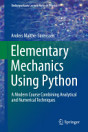
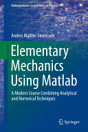
Anders Malthe-Sørenssen is the director of the Center for Computing in Science Education, a Center for Excellence in Education, and a Professor of Physics at the University of Oslo. His research interests span the nanoscale and statistical physics, friction, physics of geological processes, neuroscience and AI. Currently, his teaching efforts are focused on revitalizing undergraduate science courses by seamlessly integrating computational methods, providing students with early exposure to research and industrially relevant problems.
Anders Malthe-Sørenssen is the director of the Center for Computing in Science Education, a Center for Excellence in Education, and a Professor of Physics at the University of Oslo. His research interests span the nanoscale and statistical physics, friction, physics of geological processes, neuro...

Donner une note à cet e-book

Dites-nous ce que vous en pensez.

Informations sur la lecture

Smartphones et tablettes
Installez l'application Google Play Livres pour Android et iPad ou iPhone. Elle se synchronise automatiquement avec votre compte et vous permet de lire des livres en ligne ou hors connexion, où que vous soyez.
Ordinateurs portables et de bureau
Vous pouvez écouter les livres audio achetés sur Google Play à l'aide du navigateur Web de votre ordinateur.
Liseuses et autres appareils
Pour lire sur des appareils e-Ink, comme les liseuses Kobo, vous devez télécharger un fichier et le transférer sur l'appareil en question. Suivez les instructions détaillées du Centre d'aide pour transférer les fichiers sur les liseuses compatibles.