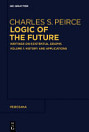
Peirce’s Logic of Information
dec. de 2025 · Peirceana Libro 8 · Walter de Gruyter GmbH & Co KG
Libro electrónico
198
Páxinas
Ferramentas
info
Acerca deste libro electrónico
Charles S. Peirce is generally known to have produced a theory of signs and to have been the founder of pragmatism. What is less known is that he was the first philosopher to develop a conception of information in the context of his early research on the philosophy of science. The book shows that that the notion of information is an essential element of his philosophy; it provides a study of the logical and semiotic underpinnings. The papers presented focus on the years 1865–1867, during which Peirce defines the first pieces of his philosophical system. The question Peirce asks is how and to what extent representations can increase the quantity of what they represent. He discovers that they can do so in two ways, depending on whether they participate in one or the other of the two types of probable inference, namely induction and abduction. Information is the measure of this growth of knowledge at the heart of representations. Closely related to the concept of Interpretant, it plays a key role in the theory of realism that defines the first period of Peirce’s philosophy. It is also a precursor of what Peirce would later call his “logic of vagueness.”
Charles S. Peirce is generally known to have produced a theory of signs and to have been the founder of pragmatism. What is less known is that he was the first philosopher to develop a conception of information in the context of his early research on the philosophy of science. The book shows that...
Descubrir máis
Acerca do autor
Jérôme Vogel, Université du Québec en Outaouais, Gatineau, Canada.
Jérôme Vogel, Université du Québec en Outaouais, Gatineau, Canada.
Valora este libro electrónico
Dános a túa opinión.
Información de lectura
Smartphones e tabletas
Instala a aplicación Google Play Libros para Android e iPad/iPhone. Sincronízase automaticamente coa túa conta e permíteche ler contido en liña ou sen conexión desde calquera lugar.
Portátiles e ordenadores de escritorio
Podes escoitar os audiolibros comprados en Google Play a través do navegador web do ordenador.
Lectores de libros electrónicos e outros dispositivos
Para ler contido en dispositivos de tinta electrónica, como os lectores de libros electrónicos Kobo, é necesario descargar un ficheiro e transferilo ao dispositivo. Sigue as instrucións detalladas do Centro de axuda para transferir ficheiros a lectores electrónicos admitidos.