Passing
ഈ ഇ-ബുക്കിനെക്കുറിച്ച്
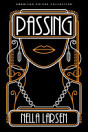
When childhood friends Irene Redfield and Clare Kendry cross paths at a whites-only restaurant, it’s been decades since they last met. Married to a bigoted white man who has no idea that she is African American, Clare has fully embraced her ability to “pass” as a white woman. Irene, also light-skinned and living in Harlem, is shocked by Clare’s rejection of her heritage, though she too passes when it suits her needs. This encounter sparks an intense relationship between the two women who, as acclaimed critic and novelist Darryl Pinckney writes in his insightful introduction, reflect Larsen’s own experience of being “between black and white, and culturally at home nowhere.”
In a culture intent on setting boundaries, Clare and Irene refuse to adhere to expectations of gender, race, or class, culminating in a tragic clash of identities, as their relationship swings between emotional hostility and intense attraction.
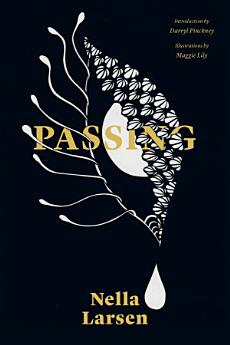
“Nella Larsen’s Passing is one of those American classics that I’ve always meant to get around to. A new edition is out today from Restless Books, with a handsome cover (and interior illustrations, all by Maggie Lily) and an introduction by the novelist and critic Darryl Pinckney. If I’m going to tackle a classic, I like to have a teacher to help me along the way…. It’s a remarkable book, and Maggie Lily’s dark illustrations end up feeling very appropriate.”
—Rumaan Alam, The New York Times Books Newsletter
Praise for Passing
"Quicksand and Passing are novels I will never forget. They open up a whole world of experience and struggle that seemed to me, when I first read them years ago, absolutely absorbing, fascinating, and indispensable."
—Alice Walker
"Discovering Nella Larsen is like finding lost money with no name on it. One can enjoy it with delight and share it without guilt."
—Maya Angelou
“Nella Larsen didn’t just eschew tribes — she never had one to begin with…. Unsparing on the madness of racial classification but frank, and very beautiful, on the lure of racial belonging.”
—Parul Sehgal, The New York Times
“[Passing] is about changing definitions of concepts like race and gender, and the inextricable relationship between whiteness and blackness. It is a meditation on the uneasy dynamic between social obligation and personal freedom. It dramatizes the impossibility of self-invention in a society in which nuance and ambiguity are considered fatal threats to the social order.”
—Emily Bernard, Electric Literature
“I have read and re-read Passing more than a dozen times. Each time I think I can hear Larsen's own voice more clearly: asking, demanding really, that each of us abandon the labels we've been assigned and celebrate the story that we are.”
—Heidi W. Durrow, NPR
“Passing broke literary ground as the story of two racially and sexually ambiguous women written by another. Social boundaries can be permeated, but not without cost.”
—Natalie Cate, The Guardian, 1000 novels everyone must read
കൂടുതൽ കണ്ടെത്തൂ
റേറ്റിംഗുകളും റിവ്യൂകളും
രചയിതാവിനെ കുറിച്ച്
About the Author:
Nella Larsen was born Nellie Walker in 1891 in Chicago. Her mother was a Danish immigrant and her father an immigrant from the Danish West Indies. Larsen attended school in all white environments in Chicago until she moved to Nashville to attend high school. Larsen later practiced nursing, and from 1922 to 1926, served as a librarian at the New York Public Library. After resigning from this position, Larsen began her literary career by writing her first novel, Quicksand (1928), which won her the Harmon Foundation’s bronze medal. After the publication of her second novel, Passing (1929), Larsen was awarded the first Guggenheim Fellowship given to an African American woman, establishing her as a premier novelist of the Harlem Renaissance. Nella Larsen died in New York in 1964.
About the Introducer:
Darryl Pinckney, a longtime contributor to The New York Review of Books, is the author of two novels, Black Deutschland and High Cotton, and two works of nonfiction, Blackballed: The Black Vote and US Democracy and Out There: Mavericks of Black Literature.
About the Illustrator:
Maggie/Malachi Lily is a shapeshifting, black, nonbinary artist and moth from Philadelphia, PA. Seeking to combat our present day cravings for instant gratification and toxic individualism, they create works of art, literature, and programming that resonate spiritual light. They hope their work causes you to want to curl up in the sun and ponder, ideally with a cat.