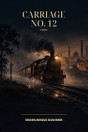
About this ebook
The stories explore themes of love, loss, sacrifice, regret, morality, and the complexities of human relationships. The title story, A Fortnight at the Dead Lake, follows Dr. Eberhard, a troubled man seeking escape from painful memories, whose encounter with a young mother and her seriously ill child challenges his despair and gives him a renewed sense of purpose.
Throughout the collection, Heyse combines emotional storytelling with atmospheric settings and sensitive character studies. His stories move between melancholy, romance, tragedy, and moments of hope, offering a thoughtful portrait of people confronting difficult choices and the consequences of love.
Discover more
About the author
Paul Johann Ludwig Heyse (1830–1914) was a distinguished German writer, poet, dramatist, novelist, and translator. Born in Berlin, he studied classical and Romance philology and later settled in Munich, where he became an important figure in the city's literary circles. He was particularly celebrated for his short stories and novellas, many of which explore love, individuality, human character, and moral choices.
Heyse was awarded the Nobel Prize in Literature in 1910 in recognition of his long and productive literary career and his acclaimed short stories. He also translated Italian poetry and produced a large body of novels, plays, poetry, and prose.
The Dead Lake and Other Tales is one of his collections of fiction, translated into English by Mary Wilson.