About this ebook
About the author
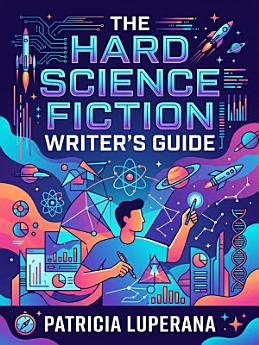
Patricia Luperana is a speculative fiction author and science communicator whose work has appeared in *Analog Science Fiction and Fact*, *Clarkesworld*, and *Lightspeed*. She holds degrees in physics and creative writing from the University of British Columbia, where her graduate research examined the intersection of scientific literacy and narrative theory—specifically how rigorous worldbuilding affects reader engagement and suspension of disbelief in hard science fiction.
Before writing fiction full-time, Luperana spent a decade in aerospace engineering, working on propulsion system design for small satellite launch vehicles. That experience forms the backbone of her approach to writing: she believes that the discipline of engineering—iterative design, constraint-based problem solving, peer review—translates directly to the craft of creating believable speculative worlds. Her short story collection *The Last Gravitational Wave*, winner of the Copper Cylinder Award for Best Debut, was praised by *Publishers Weekly* as "hard SF that remembers to be human."
Luperana teaches writing workshops internationally, focusing on research methodology for fiction writers, the integration of scientific concepts into narrative, and the business of publishing in the current literary landscape. She has served as a guest lecturer at the Clarion West Writers Workshop, the Odyssey Writing Workshop, and the Oslo Writing Academy. Her essays on the craft of speculative fiction have been featured in *Writer's Digest*, *The Science Fiction and Fantasy Writing Forum*, and the *Journal of the Fantastic in the Arts*.
She lives in Seattle with her partner and two cats, where she is at work on her second novel and a nonfiction book about the real science behind common space opera tropes. When not writing, she volunteers as a mentor for the STEM to Story program, which pairs scientists with creative writers for collaborative projects aimed at increasing public engagement with science through fiction. She believes that hard science fiction is not a niche interest but a vital mode of thinking about the future, and she is committed to helping the next generation of writers find their voices within the tradition.