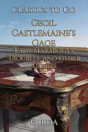
Bimbi: Restored Classics to Go Edition

· Otbebookpublishing
Ebook
177
Pages
Eligible

About this ebook

In a picturesque Tyrolean town, young August Strehla trudges home through a bitter winter night, carrying beer for his family and dreaming of the warmth that awaits him. Inside the humble Strehla household, poverty is softened by affection, resilience, and the glowing presence of Hirschvogel, the great old porcelain stove that seems almost royal in its beauty. Dorothea, the capable eldest sister, stretches meager food and limited resources to keep the children fed and cheerful, while their kind but debt-ridden father struggles to provide. Around the stove, August sketches for his younger siblings, revealing a bright, inwardly ambitious imagination that turns hardship into wonder. As Christmas nears, the stove becomes more than a source of heat: it is a symbol of memory, dignity, and family identity, tied to stories of the master potter Augustin Hirschvogel and to August's own longing to create beautiful things. That fragile happiness is shattered when Karl Strehla admits he has sold Hirschvogel to pay his debts, treating it as mere property. August sees the act as theft and betrayal, and his desperate protest ends in violence, exposing the brutal clash between poverty, parental authority, and a child's fierce sense of justice. The volume also includes a sharp satirical fable of a rose tree whose vanity and transformation reveal the bitter cost of beauty, status, and desire. This edition has been fully restored with modern typesetting, custom cover design.
In a picturesque Tyrolean town, young August Strehla trudges home through a bitter winter night, carrying beer for his family and dreaming of the warmth that awaits him. Inside the humble Strehla household, poverty is softened by affection, resilience, and the glowing presence of Hirschvogel, the...

Discover more

About the author

Ouida, the pen name of Maria Louise Ramé, was born in 1839 in England and became one of the most distinctive and controversial voices of the Victorian era. Raised in a cosmopolitan household and educated largely at home, she developed an early love of language, drama, and society, and later built a literary career in London and abroad, where she lived much of her life. She achieved wide fame through a prolific body of fiction that moved easily between romance, social satire, and emotional intensity, earning both devoted readers and sharp criticism for her bold style and strong opinions. Her writing often explored questions of class, cruelty, loyalty, beauty, ambition, and the cost of living by feeling rather than convention, and she had a particular gift for creating vivid scenes and memorable characters. In her stories for younger readers, including her well-loved children's tales, she brought the same moral seriousness and emotional richness, treating childhood not as a simple idyll but as a world shaped by kindness, loss, imagination, and courage. Today, Ouida remains relevant for readers interested in writers who challenged Victorian respectability and gave voice to outsiders, dreamers, and the vulnerable. Her work continues to resonate because it combines theatrical energy with compassion and a sharp eye for social hypocrisy. Readers who enjoy passionate storytelling, richly drawn characters, and fiction that balances sentiment with critique will find her especially rewarding.


Ouida, the pen name of Maria Louise Ramé, was born in 1839 in England and became one of the most distinctive and controversial voices of the Victorian era. Raised in a cosmopolitan household and educated largely at home, she developed an early love of language, drama, and society, and later built...

Rate this ebook

Tell us what you think.

Reading information

Smartphones and tablets
Install the Google Play Books app for Android and iPad/iPhone. It syncs automatically with your account and allows you to read online or offline wherever you are.
Laptops and computers
You can listen to audiobooks purchased on Google Play using your computer's web browser.
eReaders and other devices
To read on e-ink devices like Kobo eReaders, you'll need to download a file and transfer it to your device. Follow the detailed Help Center instructions to transfer the files to supported eReaders.