यो इ-पुस्तकका बारेमा
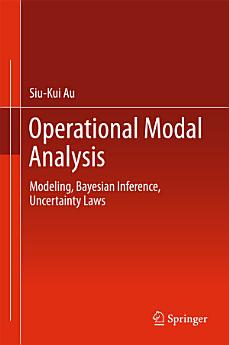
Many chapters can be used as lecture notes for the general topic they cover beyond the OMA context. After an introductory chapter (1), Chapters 2–7 present the general theory of stochastic modeling and analysis of ambient vibrations. Readers are first introduced to the spectral analysis of deterministic time series (2) and structural dynamics (3),which do not require the use of probability concepts. The concepts and techniques in these chapters are subsequently extended to a probabilistic context in Chapter 4 (on stochastic processes) and in Chapter 5 (on stochastic structural dynamics). In turn, Chapter 6 introduces the basics of ambient vibration instrumentation and data characteristics, while Chapter 7 discusses the analysis and simulation of OMA data, covering different types of data encountered in practice. Bayesian and classical statistical approaches to system identification are introduced in a general context in Chapters 8 and 9, respectively.
Chapter 10 provides an overview of different Bayesian OMA formulations, followed by a general discussion of computational issues in Chapter 11. Efficient algorithms for different contexts are discussed in Chapters 12–14 (single mode, multi-mode, and multi-setup). Intended for readers with a minimal background in mathematics, Chapter 15 presents the ‘uncertainty laws’ in OMA, one of the latest advances that establish the achievable precision limit of OMA and provide a scientific basis for planning ambient vibration tests. Lastly Chapter 16 discusses the mathematical theory behind the results in Chapter 15, addressing the needs of researchers interested in learning the techniques for further development. Three appendix chapters round out the coverage.
This book is primarily intended for graduate/senior undergraduate students and researchers, although practitioners will also find the book a useful reference guide. It covers materials from introductory to advanced level, which are classified accordingly to ensure easy access. Readers with an undergraduate-level background in probability and statistics will find the book an invaluable resource, regardless of whether they are Bayesian or non-Bayesian.
थप कुरा पत्ता लगाउनुहोस्
लेखकको बारेमा
Dr. Au is Professor of Uncertainty, Reliability & Risk in the Center for Engineering Dynamics and Institute for Risk & Uncertainty, University of Liverpool (UK); and Chutian Professor in the School of Water Resources & Hydropower Engineering, Wuhan University (China). He holds a PhD (2001, Caltech) in civil engineering and has been working in the area of the monograph for over twenty years. He performs fundamental and applied research in engineering risk methods and structural health monitoring. He has developed an advanced Monte Carlo method called Subset Simulation that has found applications in many disciplines, e.g., civil, mechanical, aerospace, electrical and nuclear engineering. He is experienced in full-scale dynamic testing of structures and has consulted on vibration projects on long-span pedestrian bridges, large-span floors, super-tall buildings and micro-tremors. Dr. Au is recipient of the IASSAR Junior Research Prize (2005), Nishino Prize (2011),JSPS Fellowship (2014) and Tan Chin Tuan Fellowship (2015).