The Wordspotter's Guide: A Jaunt Through Our Etymological Past
Nov 2026 · Sold by Penguin
Ebook
336
Pages
Tools
info
family_home
Eligible
info
infoThis book will become available on November 10, 2026. You will not be charged until it is released.
About this ebook
A rollicking, beautifully illustrated adventure through the history of the English language
“An insanely original exploration of where our words come from, and how much historical power they contain. But proceed with care: your newfound authority may just make you insufferable.”–Simon Garfield, New York Times bestselling author of Just My Type
English is by many measures the largest language in the world—and doubtless the unruliest. Over the last millennium, we’ve borrowed, stolen, conquered, and invented our way to a massive lexicon, a million words by some counts. Hiding in that corpus are countless untold stories—beautiful, sad, hilarious, profane—which together offer a record of how we’ve conceived of and spoken about the world.
It’s time to go wordspotting, with the inimitable Olivia Swarthout as your guide. You’ll discover that the term silhouette comes from eighteenth-century French finance minister Etienne de Silhouette, whose austerity measures caused his name to be associated with any low-quality work, such as the black paper cutouts that were a cheaper alternative to traditional portraits. That the seemingly modern word unfriend dates all the way back to the seventeenth century. And that robe and robbed share an etymological root, dating to a time when constructing clothing was so labor-intensive that it was the most valuable thing in most people’s homes and thus a target for thieves.
Olivia Swarthout tells a deeply researched, authoritative story about the history of the English language, without losing sight of the fun. If you’ve ever wondered which meaning of cardinal came first (the direction, then the Church figure, then the bird) or lamented that we no longer give people names like John the Wifeless, Ralph the Haunted, and Hugh the Ass (all citizens of eleventh-century Britain), this is the book for you.
A rollicking, beautifully illustrated adventure through the history of the English language
“An insanely original exploration of where our words come from, and how much historical power they contain. But proceed with care: your newfound authority may just make you insufferable.”–Simon Garfield, ...
About the author
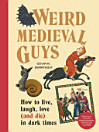
OLIVIA SWARTHOUT is a chronicler of strange stories from our distant past, especially the Middle Ages. She is the author of Weird Medieval Guys. Her first name is derived from the Latin oliva, meaning "olive," and her surname is of Middle Dutch origin, roughly corresponding to "black forest."
OLIVIA SWARTHOUT is a chronicler of strange stories from our distant past, especially the Middle Ages. She is the author of Weird Medieval Guys. Her first name is derived from the Latin oliva, meaning "olive," and her surname is of Middle Dutch origin, roughly corresponding to "black forest."
Reading information
Smartphones and tablets
Install the Google Play Books app for Android and iPad/iPhone. It syncs automatically with your account and allows you to read online or offline wherever you are.
Laptops and computers
You can listen to audiobooks purchased on Google Play using your computer's web browser.
eReaders and other devices
To read on e-ink devices like Kobo eReaders, you'll need to download a file and transfer it to your device. Follow the detailed Help Center instructions to transfer the files to supported eReaders.