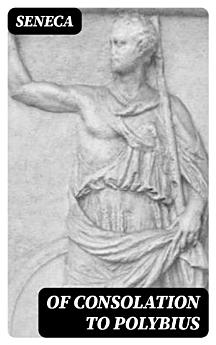
Of Consolation to Polybius
ago 2022 · DigiCat
Libro electrónico
24
Páginas
family_home
Apto
info
Acerca de este libro electrónico
Seneca's "Of Consolation to Polybius" is a profound work that explores the themes of suffering, loss, and the human condition through the lens of Stoic philosophy. Written in a time marked by personal and political upheaval, Seneca employs a reflective and poetic prose style that intertwines rhetoric and philosophical inquiry. The dialogue, intended for his friend Polybius, serves both as a personal letter and a universal meditation on how to cope with misfortune, drawing heavily on tradition and the wisdom of Greek philosophical schools, amplifying themes of resilience and inner peace amid adversity. Lucius Annaeus Seneca, a Stoic philosopher, statesman, and playwright, lived during the tumultuous reign of Emperor Nero. His experiences with loss, exile, and the complexities of human emotion deeply informed his writings. "Of Consolation to Polybius," crafted during a period of personal distress, reflects his commitment to using philosophical discourse as a means to alleviate suffering, revealing his capacity to merge personal grief with broader philosophical insights. I highly recommend "Of Consolation to Polybius" to readers seeking solace through literature. Seneca's eloquence and sincerity provide not only comfort but also a practical framework for confronting life's inevitable tribulations, making this work a timeless guide for those grappling with existential despair.
Seneca's "Of Consolation to Polybius" is a profound work that explores the themes of suffering, loss, and the human condition through the lens of Stoic philosophy. Written in a time marked by personal and political upheaval, Seneca employs a reflective and poetic prose style that intertwines rhet...
Acerca del autor
Lucius Annaeus Seneca (c. 4 BCE – 65 CE), known simply as Seneca, was a Roman Stoic philosopher, statesman, and dramatist of the Silver Age of Latin literature. Among his vast corpus of work, Seneca crafted essays, dialogues, and letters that profoundly impacted subsequent generations. His contribution to Stoic philosophy is especially noteworthy, with texts that were designed to offer guidance and comfort to those grappling with the vicissitudes of life. His treatise 'Of Consolation to Polybius' is one such text, where he consoles Polybius on the death of his brother, employing Stoic philosophy to fortify the spirit against grief. Seneca's literary style is characterized by its aphoristic wisdom, persuasive rhetoric, and ethical concerns. His works, including 'Of Consolation to Polybius', exhibit a keen understanding of the human condition, utilizing both pathos and logical argumentation to underpin his Stoic ideals. Seneca's influence is lasting, with his writings providing insight into Roman thought and serving as fundamental texts for those studying Stoicism. His teachings on virtue, ethics, and the role of philosophy in everyday life continue to resonate through the ages.
Lucius Annaeus Seneca (c. 4 BCE – 65 CE), known simply as Seneca, was a Roman Stoic philosopher, statesman, and dramatist of the Silver Age of Latin literature. Among his vast corpus of work, Seneca crafted essays, dialogues, and letters that profoundly impacted subsequent generations. His contri...
Califica este libro electrónico
Cuéntanos lo que piensas.
Información de lectura
Smartphones y tablets
Instala la app de Google Play Libros para Android y iPad/iPhone. Como se sincroniza de manera automática con tu cuenta, te permite leer en línea o sin conexión en cualquier lugar.
Laptops y computadoras
Para escuchar audiolibros adquiridos en Google Play, usa el navegador web de tu computadora.
Lectores electrónicos y otros dispositivos
Para leer en dispositivos de tinta electrónica, como los lectores de libros electrónicos Kobo, deberás descargar un archivo y transferirlo a tu dispositivo. Sigue las instrucciones detalladas que aparecen en el Centro de ayuda para transferir los archivos a lectores de libros electrónicos compatibles.