About this ebook
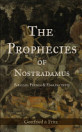
First published in 1555 and enlarged thereafter, Les Propheties gathers cryptic quatrains into ten Centuries. Ominous scenes of comets, kings, sieges, and plague are cast in dense, rhymed lines whose anagrams, ellipses, and multilingual puns practice studied obscurity. Blending biblical prophecy, medieval astrology, and humanist erudition, the sequence voices Europe's crisis imagination on the eve of the French Wars of Religion. Michel de Nostredame (1503–1566), a Provençal apothecary-physician and astrologer, built his repute with plague work and popular almanacs before attempting a more durable vatic corpus. Educated in medicine and mathematics and linked to Lyonese printers, he prefaced the book to his son César and to Henry II, presenting a method that fuses historical learning, celestial calculation, and meditative vigilance amid France's mounting confessional strife. Approach this text as a primary document of early modern imagination, not a ledger of literal forecasts. Scholars of literature, science, and religion will find a laboratory of rhetoric and reception; curious readers will value its disciplined ambiguity. Choose a sound, annotated edition and let its dark glass refract our narratives of crisis and hope. Quickie Classics summarizes timeless works with precision, preserving the author's voice and keeping the prose clear, fast, and readable—distilled, never diluted. Enriched Edition extras: Introduction · Synopsis · Historical Context · Author Biography · Brief Analysis · 4 Reflection Q&As · Editorial Footnotes.
First published in 1555 and enlarged thereafter, Les Propheties gathers cryptic quatrains into ten Centuries. Ominous scenes of comets, kings, sieges, and plague are cast in dense, rhymed lines whose anagrams, ellipses, and multilingual puns practice studied obscurity. Blending biblical prophecy,...
Rate this ebook
Tell us what you think.
Reading information
Smartphones and tablets
Install the Google Play Books app for Android and iPad/iPhone. It syncs automatically with your account and allows you to read online or offline wherever you are.
Laptops and computers
You can listen to audiobooks purchased on Google Play using your computer's web browser.
eReaders and other devices
To read on e-ink devices like Kobo eReaders, you'll need to download a file and transfer it to your device. Follow the detailed Help Center instructions to transfer the files to supported eReaders.