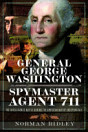
General George Washington – Spymaster Agent 711: The Intelligence Battle during the American War of Independence
Mar 2026 · Frontline Books
Ebook
256
Pages
family_home
Eligible
info
About this ebook
“You’ll get plenty of tales of clever ruses and dead drops— Washington was a fan of intel. This book explains how spying aided the American fight for independence.” – Historical Miniatures Gaming Society When the American War of Independence broke out, the American, British and French intelligence agencies were particularly well structured, but it soon became apparent to all involved that victory hinged on sound political and military intelligence. While Britain and France had a tradition of conducting espionage, the Americans struggled with an intelligence service that was almost always markedly inferior. Even so, despite this disadvantage, it was they who prevailed. Right from the start, General George Washington had been keenly aware of the importance of the espionage and counterintelligence roles. Under his supervision, several networks of spies operated in both close-knit circles and far-reaching societies. The undercover agents were merchants, tailors, farmers, and other extraordinary patriots with ordinary day jobs. Benjamin Franklin took responsibility for covert action, while John Jay oversaw the counterintelligence work. All three men were all honoured by the CIA in 1997 as the Founding Fathers of the American intelligence services. The British, in particular, required information about geography and terrain unfamiliar to their forces. The British, for example, conducted a campaign of trying to win over the American public and especially the enslaved people of African descent. They also relied in part on spies such as Benedict Arnold, whose name later became synonymous with treason and betrayal. Discounting technology, there are few differences between modern espionage and the techniques and methods of 250 years ago. Double agents, secret writing, dead drops, clandestine meetings, code-making and breakings, sabotage, bribery deception, signals, propaganda, and partisan warfare were all very much in evidence during the revolution. Both sides also mounted disinformation campaigns to confuse and mislead. In no small part, the outcome of a number of Civil War battles, such as Lexington, Concord and Yorktown, owed much to the use of intelligence and the work of America’s spymaster, Agent 711 – General George Washington.
“You’ll get plenty of tales of clever ruses and dead drops— Washington was a fan of intel. This book explains how spying aided the American fight for independence.” – Historical Miniatures Gaming Society When the American War of Independence broke out, the American, British and French intelligenc...
Discover more
About the author
Norman Ridley is an Open University Honours graduate and a writer on inter-war intelligence. He lives in the Channel Islands.
Norman Ridley is an Open University Honours graduate and a writer on inter-war intelligence. He lives in the Channel Islands.
Rate this ebook
Tell us what you think.
Reading information
Smartphones and tablets
Install the Google Play Books app for Android and iPad/iPhone. It syncs automatically with your account and allows you to read online or offline wherever you are.
Laptops and computers
You can listen to audiobooks purchased on Google Play using your computer's web browser.
eReaders and other devices
To read on e-ink devices like Kobo eReaders, you'll need to download a file and transfer it to your device. Follow the detailed Help Center instructions to transfer the files to supported eReaders.