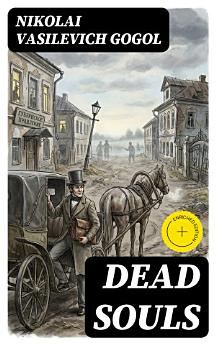
Dead Souls: Enriched edition.
Nikolai Vasilevich Gogol
Jun 2022 · DigiCat
Ebook
354
Pages
family_home
Eligible
info
About this ebook
Nikolai Vasilevich Gogol's "Dead Souls" is a seminal work of Russian literature that deftly weaves dark humor with keen social commentary. The novel follows the misadventures of Chichikov, a notorious swindler who seeks to acquire deceased serfs—deemed 'dead souls'—in order to elevate his social status. Gogol employs a rich, satirical style that intricately critiques the bureaucratic absurdities and moral vacuity of Russian society in the 19th century, embedding sharp observations within a vivid narrative landscape that combines grotesque realism and surrealism. This exploration of themes such as identity, materialism, and the quest for social redemption marks "Dead Souls" as an essential precursor to later existential literature. Gogol, born in 1809 in what is now Ukraine, was deeply influenced by the cultural and political landscapes of his time. His own experiences with the complexities of Russian bureaucracy, combined with a profound interest in folklore and the human condition, propelled him to create a work that serves as both an indictment and a reflection of his society. Gogol's unique literary voice, characterized by its blend of humor and tragedy, positions him as a pivotal figure in the transition from Romanticism to Realism in Russian literature. "Dead Souls" is a must-read for those interested in the intricacies of human nature and societal critiques. With its masterful blend of satire and philosophical depth, the novel invites readers to reflect on moral dilemmas and the absurdities of life. Whether one approaches it from a literary, historical, or cultural perspective, Gogol's work continues to resonate, making it a timeless classic in the canon of world literature. In this enriched edition, we have carefully created added value for your reading experience: - A succinct Introduction situates the work's timeless appeal and themes. - The Synopsis outlines the central plot, highlighting key developments without spoiling critical twists. - A detailed Historical Context immerses you in the era's events and influences that shaped the writing. - An Author Biography reveals milestones in the author's life, illuminating the personal insights behind the text. - A thorough Analysis dissects symbols, motifs, and character arcs to unearth underlying meanings. - Reflection questions prompt you to engage personally with the work's messages, connecting them to modern life. - Hand‐picked Memorable Quotes shine a spotlight on moments of literary brilliance. - Interactive footnotes clarify unusual references, historical allusions, and archaic phrases for an effortless, more informed read.
Nikolai Vasilevich Gogol's "Dead Souls" is a seminal work of Russian literature that deftly weaves dark humor with keen social commentary. The novel follows the misadventures of Chichikov, a notorious swindler who seeks to acquire deceased serfs—deemed 'dead souls'—in order to elevate his social ...
Discover more
About the author
Nikolai Vasilevich Gogol (1809–1852) was a preeminent Russian dramatist, novelist, and short story writer, whose works are indispensable in the classic canon of Russian literature. Born in Sorochintsy, modern-day Ukraine, Gogol's early works were influenced by his Ukrainian heritage. His unique literary style, often characterized by a blend of the grotesque and the humorous, the fantastical and the mundane, was a precursor to the later Russian absurdists. Gogol's magnum opus, 'Dead Souls' (1842), stands as a seminal work in Russian prose. 'Dead Souls' is a satirical exposition of the Russian gentry and a commentary on the nation's moral and social health. The novel's protagonist, Chichikov, travels through provincial Russia, purchasing 'dead souls'—deceased serfs still accounted for in property registers in order to exploit a legal loophole. Through this narrative, Gogol masterfully crafts a critique of the pervasive corruption and the spiritual malaise of Russian society. His work, both for its stylistic innovation and its incisive social criticism, laid the groundwork for later Russian literary luminaries such as Dostoevsky, Tolstoy, and Chekhov. Gogol's contribution to literature goes beyond his satirical ethos, encompassing a broader legacy of exploring identity, absurdity, and the human condition, themes that resonate as deeply now as they did in his own time.
Nikolai Vasilevich Gogol (1809–1852) was a preeminent Russian dramatist, novelist, and short story writer, whose works are indispensable in the classic canon of Russian literature. Born in Sorochintsy, modern-day Ukraine, Gogol's early works were influenced by his Ukrainian heritage. His unique l...
Rate this ebook
Tell us what you think.
Reading information
Smartphones and tablets
Install the Google Play Books app for Android and iPad/iPhone. It syncs automatically with your account and allows you to read online or offline wherever you are.
Laptops and computers
You can listen to audiobooks purchased on Google Play using your computer's web browser.
eReaders and other devices
To read on e-ink devices like Kobo eReaders, you'll need to download a file and transfer it to your device. Follow the detailed Help Center instructions to transfer the files to supported eReaders.