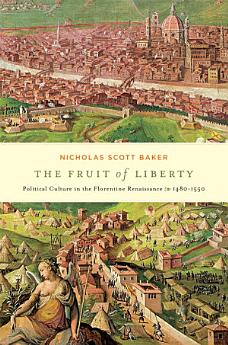
The Fruit of Liberty: Political Culture in the Florentine Renaissance, 1480-1550
Nov 2013 · I Tatti Studies in Italian Renaissance History Book 9 · Harvard University Press
Ebook
300
Pages
Tools
info
About this ebook
In the middle decades of the sixteenth century, the republican city-state of Florence--birthplace of the Renaissance--failed. In its place the Medici family created a principality, becoming first dukes of Florence and then grand dukes of Tuscany. The Fruit of Liberty examines how this transition occurred from the perspective of the Florentine patricians who had dominated and controlled the republic. The book analyzes the long, slow social and cultural transformations that predated, accompanied, and facilitated the institutional shift from republic to principality, from citizen to subject.
More than a chronological narrative, this analysis covers a wide range of contributing factors to this transition, from attitudes toward office holding, clothing, and the patronage of artists and architects to notions of self, family, and gender. Using a wide variety of sources including private letters, diaries, and art works, Nicholas Baker explores how the language, images, and values of the republic were reconceptualized to aid the shift from citizen to subject. He argues that the creation of Medici principality did not occur by a radical break with the past but with the adoption and adaptation of the political culture of Renaissance republicanism.
More than a chronological narrative, this analysis covers a wide range of contributing factors to this transition, from attitudes toward office holding, clothing, and the patronage of artists and architects to notions of self, family, and gender. Using a wide variety of sources including private letters, diaries, and art works, Nicholas Baker explores how the language, images, and values of the republic were reconceptualized to aid the shift from citizen to subject. He argues that the creation of Medici principality did not occur by a radical break with the past but with the adoption and adaptation of the political culture of Renaissance republicanism.
In the middle decades of the sixteenth century, the republican city-state of Florence--birthplace of the Renaissance--failed. In its place the Medici family created a principality, becoming first dukes of Florence and then grand dukes of Tuscany. The Fruit of Liberty examines how this transition ...
Discover more
About the author
Nicholas Scott Baker is Lecturer in Early Modern European History at Macquarie University.
Nicholas Scott Baker is Lecturer in Early Modern European History at Macquarie University.
Rate this ebook
Tell us what you think.
Reading information
Smartphones and tablets
Install the Google Play Books app for Android and iPad/iPhone. It syncs automatically with your account and allows you to read online or offline wherever you are.
Laptops and computers
You can listen to audiobooks purchased on Google Play using your computer's web browser.
eReaders and other devices
To read on e-ink devices like Kobo eReaders, you'll need to download a file and transfer it to your device. Follow the detailed Help Center instructions to transfer the files to supported eReaders.