О овој е-књизи
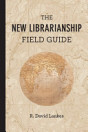
Let us start with a simple scenario: a man asks a woman "how high is Mount Everest?" The woman replies "29,029 feet." Nothing could be simpler. Now let us suppose that rather than standing in a room, or sitting on a bus, the man is at his desk and the woman is 300 miles away with the conversation taking place using e-mail. Still simple? Certainly--it happens every day. So why all the bother about digital (virtual, electronic, chat, etc.) reference? If the man is a pilot flying over Mount Everest, the answer matters. If you are a lawyer going to court, the identity of the woman is very important. Also, if you ever want to find the answer again, how that transaction took place matters a lot. Digital reference is a deceptively simple concept on its face: "the incorporation of human expertise into the information system." This lecture seeks to explore the question of how human expertise is incorporated into a variety of information systems, from libraries, to digital libraries, to information retrieval engines, to knowledge bases. What we learn through this endeavor, begun primarily in the library context, is that the models, methods, standards, and experiments in digital reference have wide applicability. We also catch a glimpse of an unfolding future in which ubiquitous computing makes the identification, interaction, and capture of expertise increasingly important. It is a future that is much more complex than we had anticipated. It is a future in which documents and artifacts are less important than the contexts of their creation and use. Table of Contents: Defining Reference in a Digital Age / Conversations / Digital Reference in Practice / Digital Reference an a New Future / Conclusion
Let us start with a simple scenario: a man asks a woman "how high is Mount Everest?" The woman replies "29,029 feet." Nothing could be simpler. Now let us suppose that rather than standing in a room, or sitting on a bus, the man is at his desk and the woman is 300 miles away with the conversation...
Откријте још
О аутору
R. David Lankes is director of the Information Institute of Syracuse and an associate professor in Syracuse University’s School of Information Studies. Lankes has always been interested in combining theory and practice to create active research projects that make a difference. Past projects include the ERIC Clearinghouse on Information and Technology, the Gateway to Education Materials, AskERIC, and the Virtual Reference Desk. Lankes’ more recent work involves how participatory concepts can reshape libraries and credibility. This work expands his ongoing work to understand the integration of human expertise in information systems. Lankes is a passionate advocate for libraries and their essential role in today’s society. He also seeks to understand how information approaches and technologies can be used to transform industries. In this capacity, he has served on advisory boards and study teams in the fields of libraries, telecommunications, education, and transportation, including at the National Academies. He has been appointed as a visiting fellow at the National Library of Canada, the Harvard School of Education, and the first fellow of American Library Association’s Office for Information Technology Policy.
R. David Lankes is director of the Information Institute of Syracuse and an associate professor in Syracuse University’s School of Information Studies. Lankes has always been interested in combining theory and practice to create active research projects that make a difference. Past projects inclu...
Оцените ову е-књигу
Јавите нам своје мишљење.
Информације о читању
Паметни телефони и таблети
Инсталирајте апликацију Google Play књиге за Android и iPad/iPhone. Аутоматски се синхронизује са налогом и омогућава вам да читате онлајн и офлајн где год да се налазите.
Лаптопови и рачунари
Можете да слушате аудио-књиге купљене на Google Play-у помоћу веб-прегледача на рачунару.
Е-читачи и други уређаји
Да бисте читали на уређајима које користе е-мастило, као што су Kobo е-читачи, треба да преузмете фајл и пренесете га на уређај. Пратите детаљна упутства из центра за помоћ да бисте пренели фајлове у подржане е-читаче.