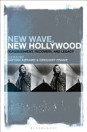
New Wave, New Hollywood: Reassessment, Recovery, and Legacy
Sep 2021 · Bloomsbury Publishing USA
Ebook
272
Pages
About this ebook
As a period of film history, The American New Wave (ordinarily understood as beginning in 1967 and ending in 1980) remains a preoccupation for scholars and audiences alike. In traditional accounts, it is considered to be bookended by two periods of conservatism, and viewed as a (brief) period of explosive creativity within the Hollywood system. From Bonnie and Clyde to Heaven's Gate, it produced films that continue to be watched, discussed, analysed and poured over.
It has, however, also become rigidly defined as a cinema of director-auteurs who made a number of aesthetically and politically significant films. This has led to marginalization and exclusion of many important artists and filmmakers, as well as a temporal rigidity about what and who is considered part of the 'New Wave proper'. This collection seeks to reinvigorate debate around this area of film history. It also looks in part to demonstrate the legacy of aesthetic experimentation and political radicalism after 1980 as part of the 'legacy' of the New Wave. Thanks to important new work that questions received scholarly wisdom, reveals previously marginalised filmmakers (and the films they made), considers new genres, personnel, and films under the banner of 'New Wave, New Hollywood', and reevaluates the traditional approaches and perspectives on the films that have enjoyed most critical attention, New Wave, New Hollywood: Reassessment, Recovery, Legacy looks to begin a new discussion about Hollywood cinema after 1967.
It has, however, also become rigidly defined as a cinema of director-auteurs who made a number of aesthetically and politically significant films. This has led to marginalization and exclusion of many important artists and filmmakers, as well as a temporal rigidity about what and who is considered part of the 'New Wave proper'. This collection seeks to reinvigorate debate around this area of film history. It also looks in part to demonstrate the legacy of aesthetic experimentation and political radicalism after 1980 as part of the 'legacy' of the New Wave. Thanks to important new work that questions received scholarly wisdom, reveals previously marginalised filmmakers (and the films they made), considers new genres, personnel, and films under the banner of 'New Wave, New Hollywood', and reevaluates the traditional approaches and perspectives on the films that have enjoyed most critical attention, New Wave, New Hollywood: Reassessment, Recovery, Legacy looks to begin a new discussion about Hollywood cinema after 1967.
As a period of film history, The American New Wave (ordinarily understood as beginning in 1967 and ending in 1980) remains a preoccupation for scholars and audiences alike. In traditional accounts, it is considered to be bookended by two periods of conservatism, and viewed as a (brief) period of ...
Discover more
About the author
Nathan Abrams is Professor in Film at Bangor University in Wales. He is founding co-editor of Jewish Film and New Media: An International Journal, as well as the author of The New Jew in Film: Exploring Jewishness and Judaism in Contemporary Cinema, Stanley Kubrick: New York Jewish Intellectual, Eyes Wide Shut: Stanley Kubrick and the Making of His Final Film (with Robert Kolker) and The Bloomsbury Companion to Stanley Kubrick (with IQ Hunter).
Gregory Frame is Teaching Associate in Film and Television Studies at the University of Nottingham. He is the author of The American President in Film and Television: Myth, Politics and Representation (2014). He has published articles about the politics of American film and television in Journal of American Studies, New Review of Film and Television Studies, and Journal of Popular Film and Television.
Gregory Frame is Teaching Associate in Film and Television Studies at the University of Nottingham. He is the author of The American President in Film and Television: Myth, Politics and Representation (2014). He has published articles about the politics of American film and television in Journal of American Studies, New Review of Film and Television Studies, and Journal of Popular Film and Television.
Nathan Abrams is Professor in Film at Bangor University in Wales. He is founding co-editor of Jewish Film and New Media: An International Journal, as well as the author of The New Jew in Film: Exploring Jewishness and Judaism in Contemporary Cinema, Stanley Kubrick: New York Jewish Intellectual, ...
Rate this ebook
Tell us what you think.
Reading information
Smartphones and tablets
Install the Google Play Books app for Android and iPad/iPhone. It syncs automatically with your account and allows you to read online or offline wherever you are.
Laptops and computers
You can listen to audiobooks purchased on Google Play using your computer's web browser.
eReaders and other devices
To read on e-ink devices like Kobo eReaders, you'll need to download a file and transfer it to your device. Follow the detailed Help Center instructions to transfer the files to supported eReaders.