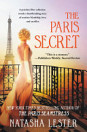
The Paris Orphan
Sep 2019 · Sold by Forever
star
7 reviews
Ebook
480
Pages
family_home
Eligible
info
About this ebook
A "rich and riveting" New York Times bestseller based on the true story of a female journalist who defied all the rules while covering World War II (Publishers Weekly, starred review).
New York City/Paris, 1942: When American model Jessica May arrives in Europe to cover the war as a photojournalist for Vogue, most of the soldiers are determined to make her life as difficult as possible. But three friendships change that. Journalist Martha Gellhorn encourages Jess to bend the rules. Captain Dan Hallworth keeps her safe in dangerous places so she can capture the stories that truly matter. And most important of all, the love of a little orphan named Victorine gives Jess strength to do the impossible. But her success will come at a price...
France, 2005: Decades after World War II, D'Arcy Hallworth arrives at a beautiful chateau to curate a collection of famous wartime photos by a reclusive artist. It's the opportunity of a lifetime, but D'Arcy has no idea that this job will uncover decades of secrets that, once revealed, will change everything she thought she knew about her mother, Victorine, and alter D'Arcy's life forever.
Includes a reading group guide!
"An emotional and sweeping tale set against the backdrop of World War II...Rich detail, compelling characters, and an interwoven dual timeline make this an engrossing read for historical fiction fans." --Chanel Cleeton, USA Today bestselling author of Next Year in Havana
"[A] splendid, breathtaking novel, full of mystery and passion...a must read!" --Jeanne Mackin, author of The Last Collection
New York City/Paris, 1942: When American model Jessica May arrives in Europe to cover the war as a photojournalist for Vogue, most of the soldiers are determined to make her life as difficult as possible. But three friendships change that. Journalist Martha Gellhorn encourages Jess to bend the rules. Captain Dan Hallworth keeps her safe in dangerous places so she can capture the stories that truly matter. And most important of all, the love of a little orphan named Victorine gives Jess strength to do the impossible. But her success will come at a price...
France, 2005: Decades after World War II, D'Arcy Hallworth arrives at a beautiful chateau to curate a collection of famous wartime photos by a reclusive artist. It's the opportunity of a lifetime, but D'Arcy has no idea that this job will uncover decades of secrets that, once revealed, will change everything she thought she knew about her mother, Victorine, and alter D'Arcy's life forever.
Includes a reading group guide!
"An emotional and sweeping tale set against the backdrop of World War II...Rich detail, compelling characters, and an interwoven dual timeline make this an engrossing read for historical fiction fans." --Chanel Cleeton, USA Today bestselling author of Next Year in Havana
"[A] splendid, breathtaking novel, full of mystery and passion...a must read!" --Jeanne Mackin, author of The Last Collection
A "rich and riveting" New York Times bestseller based on the true story of a female journalist who defied all the rules while covering World War II (Publishers Weekly, starred review).
New York City/Paris, 1942: When American model Jessica May arrives in Europe to cover the war as a photojournali...
Discover more
Ratings and reviews
7 reviews

Toby A. Smith
- Flag inappropriate
February 17, 2020
Four stars is a bit of a gift. 3.5 would be more accurate. For me, the best part of reading this book was learning what it was like for a solo woman photojournalist to cover World War II. Jessica May, a former model, must overcome restrictions, discrimination, harassment, and sexism -- yet still manages to provide exceptional photojournalism despite all those odds. But May's difficulties (experienced by other historical women journalists like Martha Gellhorn Margaret Bourke-White, and Lee Miller) provide just one of the book's story lines. This was one captivating story. May witnessed battles, visited field hospitals, was present during the liberation of a concentration camp, and covered the Nuremberg Trials. But, not surprisingly, women journalists covered other important aspects of the war that male journalists generally ignored. Like the war's impact on the psyches of both soldiers and women, widespread rape by soldiers representing all armies, and the devastating effects of shortages, destruction, and violence on children. These women told the story of war from a vantage point far beyond dates, battles, and numbers of dead. The second storyline, set in 2005, focuses on D'Arcy Hallworth, a thirtyish Australian art conservator whose job puts her in contact with the works of Jessica May, a journalism pioneer D'Arcy admires greatly. Natasha Lester alternates between these two stories -- until, not surprisingly, we figure out that there's a hidden and much closer connection between Hallworth and May. My criticism of this novel centers around the last quarter of it. Plots became unbelievably convoluted and the author appeared to be overly determined to include happy endings for nearly EVERY character. For me, that turned this novel from a worthwhile examination of brave women trying to shed light on a brutal episode in history into something much more fluffy, romantic and way too contrived. Strange coincidence, though. When I picked this book up to read I did not realize Lester based the story of Jessica May loosely on the experiences of World War II photojournalist Lee Miller. I had not heard of Miller until VERY recently, when I happened to read another novel based on her life, THE AGE OF LIGHT by Whitney Sharer. Until I figured out the connection in the subject matter, I couldn't understand why THIS book was SO much like another I'd just finished.

Larry “LC” Chapman
- Flag inappropriate
April 6, 2023
This book was extra ordinary and so well written, the story was beautiful and also very heart wrenching of the life lived and shaped by WWII. Told in a way that one must read to experience.

Gaele Hi
- Flag inappropriate
- Show review history
September 13, 2019
Intensely personal and extrapolated from the real-life women and men who served as photojournalists during World War II, Lester has given us Jessica May, a well-regarded model in 1940’s New York, one who takes photos and writes articles in hopes of something more. When her ex decided to scuttle her modeling career in hopes of ‘putting her in her place’ she is determined to go to Europe and write of the events of the war. With help from her editor and friend at Vogue, she obtains the credentials and is soon on her way to Italy, expecting to be embedded with the nursing corp. But, the hospital is on disputed territory, and the CO of the outfit, one Dan Hallworth not only keeps her safe, but the two are entangled in an attraction that neither will admit. A solid friendship forms, and the two are inexorably linked, when Jess photographs Dan with four year old Victorine, an orphan that Dan has “inherited’ from his brother and his wife, both killed by Germans. 2008 in a chateau in France, D’Arcy has been hired to package and ship photographs for an exhibit in Sydney. Not knowing the photographer, she is met by the agent, who is also unwilling to share details about his very private client. But, D’Arcy spots a photograph that is attributed to Jessica May, lost to history and her more renown male counterparts, and D’Arcy is determined to get to the bottom of the story. Well versed in Jessica May’s work, known and attributed, she did a thesis on “the Photographer” and her hard work, and some personal connections have brought her to see the archives: thousands of photographs, some known, others not- all by Jessica May. Two stories, intertwined as Lester takes us through the stories of Jessica on the front lines (or desperately trying to get there) with the other female reporters: Margaret Gellhorn, Lee Miller and others – all fighting the inherent sexism, harassment and dangers, yet doing the job, as well, or better than the men. Their eye and perspective is different – the first shots of concentration camps, the bravado of young soldiers not yet battle tested, and the haunted look of those after surviving and seeing things unimaginable. D’Arcy’s growth and revelations, as she finds her own footing – always tentative about putting herself out there – with all she learned, despite her fears, she’s moved forward and onward, hoping to find a new path that will guide her. Utterly gripping and with a full set of notes and information about these women who have been lost to history but provided images that brought the war home to thousands, not as a glorified series of battles from which the allies stood heroes – but as a true human tragedy, one that sent shockwaves throughout the world for years to come. I received an eArc copy of the title from the publisher via NetGalley for purpose of honest review. I was not compensated for this review: all conclusions are my own responsibility.
About the author
Natasha Lester worked as a marketing executive for L'Oreal before penning the New York Times and internationally bestselling novel The Paris Orphan. She is also the author of the USA Today bestseller The Paris Seamstress. When she's not writing, she loves collecting vintage fashion, traveling, reading, practicing yoga and playing with her three children. Natasha lives in Perth, Western Australia.
Natasha Lester worked as a marketing executive for L'Oreal before penning the New York Times and internationally bestselling novel The Paris Orphan. She is also the author of the USA Today bestseller The Paris Seamstress. When she's not writing, she loves collecting vintage fashion, traveling, re...
Rate this ebook
Tell us what you think.
Reading information
Smartphones and tablets
Install the Google Play Books app for Android and iPad/iPhone. It syncs automatically with your account and allows you to read online or offline wherever you are.
Laptops and computers
You can listen to audiobooks purchased on Google Play using your computer's web browser.
eReaders and other devices
To read on e-ink devices like Kobo eReaders, you'll need to download a file and transfer it to your device. Follow the detailed Help Center instructions to transfer the files to supported eReaders.