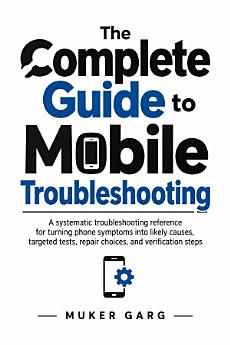
The Complete Guide to Mobile Troubleshooting: A Practical Troubleshooting System for Everyday Mobile Phone Problems
Muker Garg
Archana Kulshrestha
Ebook
17
Pages
About this ebook
This guide centers on diagnosis, using practical repair methods daily. Buttons and touch controls are tested systematically to identify patterns. Water exposure requires disciplined cleaning, drying, inspection, and measured testing. Good repair practice protects data, components, tools, customers, and technicians. Tool selection matters because unsuitable equipment can create unnecessary damage. Clean workspaces improve accuracy, organization, visibility, and safe component handling. Documentation helps technicians record symptoms, actions, findings, and successful solutions. Repair decisions should balance reliability, cost, time, and customer expectations. Testing after repair confirms whether the original complaint has disappeared. Final inspection catches loose screws, incomplete seals, damaged cables, issues. Professional service depends on patience, consistency, honesty, and controlled experimentation. Readers are encouraged to verify assumptions with measurements whenever possible. Small diagnostic clues can become powerful evidence when interpreted correctly. Repeatable procedures make difficult repairs easier to teach and perform. Troubleshooting improves when every test has a clear diagnostic purpose. Repair knowledge grows through practice, careful observation, and repeated learning. Different device designs require adaptation rather than rigid one method. Reliable technicians know when a repair should be referred elsewhere. Overall, this book promotes confident, evidence based mobile repair practice. Practical guidance helps technicians approach battery repairs systematically and confidently. Readers learn how smartphone failures can reveal underlying hardware problems. Clear explanations connect symptoms with causes, tools, measurements, and decisions. Each section encourages careful observation before any component gets replaced. Safety principles reduce accidental damage during opening, testing, and reassembly. Organized workflows help beginners build repeatable habits for everyday service. Experienced technicians can use these methods to refine diagnostic discipline. Troubleshooting begins by confirming complaints instead of guessing solutions prematurely. Visual inspection often reveals contamination, cracks, loose connectors, damaged components. Basic electrical checks provide evidence before deeper board level investigation. Software symptoms are separated from hardware faults through structured testing. Charging problems receive attention because power issues affect modern devices. Display failures are approached through connectors, settings, signals, and components. Audio problems are examined using practical tests that isolate causes. Network issues are considered from configuration checks through physical inspection. Battery behavior is interpreted carefully to distinguish wear from faults.
This guide centers on diagnosis, using practical repair methods daily. Buttons and touch controls are tested systematically to identify patterns. Water exposure requires disciplined cleaning, drying, inspection, and measured testing. Good repair practice protects data, components, tools, customer...
Discover more
About the author
The Complete Guide to Mobile Troubleshooting presents a practical approach to diagnosis in mobile device repair. Its theme combines troubleshooting, repair discipline, component awareness, safety, and repeatable workshop methods. The book supports learners, technicians, and independent repair practitioners seeking clear guidance. Contributor: Muker Garg. Author: Muker Garg. It emphasizes practical learning, careful diagnosis, reliable techniques, and professional habits, helping readers understand complex repair tasks and apply them during everyday service.
The Complete Guide to Mobile Troubleshooting presents a practical approach to diagnosis in mobile device repair. Its theme combines troubleshooting, repair discipline, component awareness, safety, and repeatable workshop methods. The book supports learners, technicians, and independent repair pra...
Rate this ebook
Tell us what you think.
Reading information
Smartphones and tablets
Install the Google Play Books app for Android and iPad/iPhone. It syncs automatically with your account and allows you to read online or offline wherever you are.
Laptops and computers
You can listen to audiobooks purchased on Google Play using your computer's web browser.
eReaders and other devices
To read on e-ink devices like Kobo eReaders, you'll need to download a file and transfer it to your device. Follow the detailed Help Center instructions to transfer the files to supported eReaders.