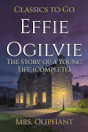
Effie Ogilvie: Restored Classics to Go Edition
About this ebook
Discover more
About the author
Mrs. (Margaret) Oliphant was one of the most prolific and perceptive writers of the Victorian era, born in 1828 in Scotland and shaped by a life marked by early ambition, family responsibility, and repeated personal loss. After an early marriage and a career that demanded extraordinary steadiness, she became a remarkably productive novelist, short story writer, critic, and biographer, producing dozens of works that won her a wide readership in Britain and beyond. Her fiction is admired for its psychological realism, moral intelligence, and subtle attention to the pressures placed on women, families, and communities, while her historical and critical writing reveals a mind alert to the changing culture of her age. Oliphant often explored themes of duty, resilience, social constraint, faith, and the quiet endurance required of ordinary lives, giving her work a continuing relevance for readers interested in the hidden emotional costs of respectability and the compromises demanded by society. She remains significant not only for the sheer scale of her achievement but also for the humane depth with which she represented domestic life, female experience, and the tensions between private feeling and public obligation. Modern readers will find in her writing both the atmosphere of Victorian life and a sharp, enduring understanding of human character, especially those who enjoy richly observed social fiction, thoughtful moral drama, and stories of women navigating difficult choices.