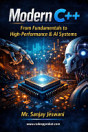
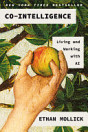
Computer Science Foundations with AI Advantage A Modern Guide for Students & Engineers
About this ebook
PART I — Foundations of Modern Computer Science
Chapter 1: Introduction to Computer Science in the AI Era
What Computer Science Means Today
Evolution of CS with AI
How AI Changes Learning & Engineering
Skills Students Need in 2025+
Chapter 2: How Computers Really Work
How CPUs Execute Programs
Registers, RAM, and Memory Hierarchy
Instruction Cycles
CPU Cache (L1, L2, L3)
How Computers Perform Calculations
Impact of Modern Hardware (GPUs, TPUs, NPUs)
Chapter 3: Operating Systems Essentials
What an Operating System Does
Processes vs Threads
Process Lifecycle
CPU Scheduling Algorithms
Concurrency on Multi-Core Systems
Interrupts and Context Switching
Memory Management
Locks, Mutexes, Semaphores
OS Concepts Explained with AI Examples
PART II — Programming & Data Foundations
Chapter 4: Choosing a Programming Language
C, C++, Java, Python, Go, Rust
When to Use Which Language
Performance vs Productivity
AI-Friendly Languages
Learning One Language Deeply vs Many Shallow
Chapter 5: Data Structures Fundamentals
Arrays
Linked Lists
Stacks & Queues
Hash Tables
Trees Overview
Heaps
Graphs
Real-World Use Cases
AI-Assisted Data Structure Optimization
Chapter 6: Advanced Tree Structures
Binary Trees
Binary Search Trees
Balanced vs Unbalanced Trees
AVL Trees
Red-Black Trees
B-Trees
2-3 Trees & 2-3-4 Trees
K-ary / M-ary Trees
KD-Trees
Skip Lists
Chapter 7: Graph Theory Essentials
Directed vs Undirected Graphs
Weighted vs Unweighted Graphs
Graph Representations
Adjacency List
Adjacency Matrix
Spanning Trees
Graphs in Social Networks & AI Models
PART III — Algorithms & Complexity
Chapter 8: Mathematical Foundations for CS
Basic Probability
Combinatorics
Discrete Mathematics for Algorithms
Math Behind AI Systems
Chapter 9: Asymptotic Analysis & Complexity
Big-O Notation
Big-Theta
Big-Omega
Small-o and Small-Omega
Common Runtime Classes
Constant
Logarithmic
Linear
Polynomial
Exponential
Factorial
Why Complexity Matters in AI Systems
Chapter 10: Searching Algorithms
Linear Search
Binary Search
Search Optimization Using AI
Chapter 11: Sorting Algorithms
Bubble Sort
Selection Sort
Insertion Sort
Merge Sort
Quick Sort
Heap Sort
Choosing the Right Sort
Sorting at Scale
Chapter 12: Recursion & Backtracking
Tail Recursion
Non-Tail Recursion
Backtracking Concepts
N-Queen Problem
Knight’s Tour
Maze Solving
AI-Generated Recursive Solutions
Chapter 13: Greedy Algorithms
Dijkstra’s Algorithm
Kruskal’s Algorithm
Prim’s Algorithm
Huffman Coding
Greedy vs Dynamic Programming
Greedy Algorithms in AI Pipelines
Chapter 14: Graph Algorithms
Breadth-First Search (BFS)
Depth-First Search (DFS)
Bellman-Ford Algorithm
Dijkstra’s Algorithm
A* Algorithm
Graph Algorithms in Maps, Games & AI
Chapter 15: Pattern Matching & String Algorithms
Brute Force Search
Rabin-Karp Algorithm
Knuth-Morris-Pratt (KMP)
Boyer-Moore Algorithm
Suffix Arrays
Tries
AI-Based Text Search & NLP
PART IV — Systems, Databases & Networking
Chapter 16: Databases Fundamentals
SQL vs NoSQL
Entity-Relationship Model
Normalization & Denormalization
ACID Model
BASE Model
CAP Theorem
PACELC Theorem
Transactions
Indexes
Views
Stored Procedures
Chapter 17: Scalable Data Systems
Replication
Sharding
Database Federation
Locking Mechanisms
Distributed Databases
AI-Driven Query Optimization
Chapter 18: Networking Fundamentals
OSI Model
TCP/IP Model
DNS
HTTP & HTTPS
TLS
Sockets
Networking for Cloud & AI Systems
PART V — System Design & Architecture
Chapter 19: System Design Basics
What is System Design
Horizontal vs Vertical Scaling
Load Balancing
Caching
Clustering
CDN
Proxy Servers
Queues
CAP Theorem in Practice
Chapter 20: Architectural Styles & APIs
Monolithic Architecture
Microservices
Event-Driven Architecture
REST APIs
GraphQL
gRPC
WebSockets
SSE
Long Polling vs Short Polling
Chapter 21: Cloud & Distributed System Design
Cloud Design Patterns
Fault Tolerance
High Availability
AI-Powered Monitoring & Scaling
Designing Systems for AI Workloads
PART VI — Software Design & Engineering
Chapter 22: Software Design Patterns
GoF Design Patterns
Architectural Patterns
Dependency Injection
Null Object Pattern
Type Object Pattern
Design Patterns with AI Examples
Chapter 23: UML & Software Modeling
Class Diagrams
Use Case Diagrams
Sequence Diagrams
Activity Diagrams
State Machine Diagrams
Modeling Complex Systems
PART VII — Security & Reliability
Chapter 24: Security Fundamentals
Hashing vs Encoding vs Encryption
Public Key Cryptography
Hashing Algorithms
Authentication & Authorization
OWASP Top 10
AI-Driven Security Threats
PART VIII — AI Advantage for Computer Science Students
Chapter 25: Learning Computer Science with AI
How AI Accelerates Learning
Using AI as a Tutor
Avoiding Over-Dependence
Prompt Engineering for CS Learning
Chapter 26: AI-Assisted Programming & Debugging
Code Generation
Code Review
Debugging with AI
Algorithm Optimization Using AI
When NOT to Trust AI Output
Chapter 27: AI in System Design & Architecture
AI-Based Capacity Planning
Predictive Scaling
Intelligent Caching
AI-Driven Observability
Chapter 28: Ethics, Responsibility & the Future
Ethical Use of AI
Bias in Algorithms
Responsible Engineering
Future of Computer Science Careers
Becoming an AI-Augmented Engineer
PART IX — Career & Practical Growth
Chapter 29: Interview Preparation & Problem Solving
DSA Interview Patterns
System Design Interviews
AI Tools for Interview Practice
Chapter 30: Becoming a Future-Ready Engineer
Building Projects
Open Source Contributions
Continuous Learning
Staying Relevant in the AI Era