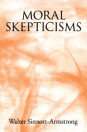
Moral Skepticism
leden 2006 · Oxford University Press
E‑kniha
288
Stránky
Nástroje
info
family_home
Vhodná
info
Podrobnosti o e‑knize
All contentious moral issues--from gay marriage to abortion and affirmative action--raise difficult questions about the justification of moral beliefs. How can we be justified in holding on to our own moral beliefs while recognizing that other intelligent people feel quite differently and that many moral beliefs are distorted by self-interest and by corrupt cultures? Even when almost everyone agrees--e.g. that experimental surgery without consent is immoral--can we know that such beliefs are true? If so, how? These profound questions lead to fundamental issues about the nature of morality, language, metaphysics, justification, and knowledge. They also have tremendous practical importance in handling controversial moral questions in health care ethics, politics, law, and education. Sinnott-Armstrong here provides an extensive overview of these difficult subjects, looking at a wide variety of questions, including: Are any moral beliefs true? Are any justified? What is justified belief? The second half of the book explores various moral theories that have grappled with these issues, such as naturalism, normativism, intuitionism, and coherentism, all of which are attempts to answer moral skepticism. Sinnott-Armstrong argues that all these approaches fail to rule out moral nihilism--the view that nothing is really morally wrong or right, bad or good. Then he develops his own novel theory,--"moderate Pyrrhonian moral skepticism"--which concludes that some moral beliefs can be justified out of a modest contrast class but no moral beliefs can be justified out of an extreme contrast class. While explaining this original position and criticizing alternatives, Sinnott-Armstrong provides a wide-ranging survey of the epistemology of moral beliefs.
All contentious moral issues--from gay marriage to abortion and affirmative action--raise difficult questions about the justification of moral beliefs. How can we be justified in holding on to our own moral beliefs while recognizing that other intelligent people feel quite differently and that ma...
O autorovi
Walter Sinnott-Armstrong is Professor of Philosophy and Hardy Professor of Legal Studies, Dartmouth College. He is author of The Existence of God and editor of Pyrrhonian Skepticism.
Walter Sinnott-Armstrong is Professor of Philosophy and Hardy Professor of Legal Studies, Dartmouth College. He is author of The Existence of God and editor of Pyrrhonian Skepticism.
Ohodnotit e‑knihu
Sdělte nám, co si myslíte.
Informace o čtení
Telefony a tablety
Nainstalujte si aplikaci Knihy Google Play pro Android a iPad/iPhone. Aplikace se automaticky synchronizuje s vaším účtem a umožní vám číst v režimu online nebo offline, ať jste kdekoliv.
Notebooky a počítače
Audioknihy zakoupené na Google Play můžete poslouchat pomocí webového prohlížeče v počítači.
Čtečky a další zařízení
Pokud chcete číst knihy ve čtečkách elektronických knih, jako např. Kobo, je třeba soubor stáhnout a přenést do zařízení. Při přenášení souborů do podporovaných čteček elektronických knih postupujte podle podrobných pokynů v centru nápovědy.