À propos de cet e-book
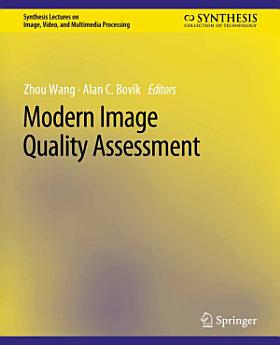
This Lecture book is about objective image quality assessment—where the aim is to provide computational models that can automatically predict perceptual image quality. The early years of the 21st century have witnessed a tremendous growth in the use of digital images as a means for representing and communicating information. A considerable percentage of this literature is devoted to methods for improving the appearance of images, or for maintaining the appearance of images that are processed. Nevertheless, the quality of digital images, processed or otherwise, is rarely perfect. Images are subject to distortions during acquisition, compression, transmission, processing, and reproduction. To maintain, control, and enhance the quality of images, it is important for image acquisition, management, communication, and processing systems to be able to identify and quantify image quality degradations. The goals of this book are as follows; a) to introduce the fundamentals of image quality assessment, and to explain the relevant engineering problems, b) to give a broad treatment of the current state-of-the-art in image quality assessment, by describing leading algorithms that address these engineering problems, and c) to provide new directions for future research, by introducing recent models and paradigms that significantly differ from those used in the past. The book is written to be accessible to university students curious about the state-of-the-art of image quality assessment, expert industrial R&D engineers seeking to implement image/video quality assessment systems for specific applications, and academic theorists interested in developing new algorithms for image quality assessment or using existing algorithms to design or optimize other image processing applications.
This Lecture book is about objective image quality assessment—where the aim is to provide computational models that can automatically predict perceptual image quality. The early years of the 21st century have witnessed a tremendous growth in the use of digital images as a means for representing a...
En voir d'autres
Donner une note à cet e-book
Dites-nous ce que vous en pensez.
Informations sur la lecture
Smartphones et tablettes
Installez l'application Google Play Livres pour Android et iPad ou iPhone. Elle se synchronise automatiquement avec votre compte et vous permet de lire des livres en ligne ou hors connexion, où que vous soyez.
Ordinateurs portables et de bureau
Vous pouvez écouter les livres audio achetés sur Google Play à l'aide du navigateur Web de votre ordinateur.
Liseuses et autres appareils
Pour lire sur des appareils e-Ink, comme les liseuses Kobo, vous devez télécharger un fichier et le transférer sur l'appareil en question. Suivez les instructions détaillées du Centre d'aide pour transférer les fichiers sur les liseuses compatibles.